Table of Contents
The alarm goes off. Eyes crack open. The kitchen beckons. One cup of coffee gets the engine running. The second cup puts things into gear. But that third cup? That third cup is where things get interesting, and not always in a good way.
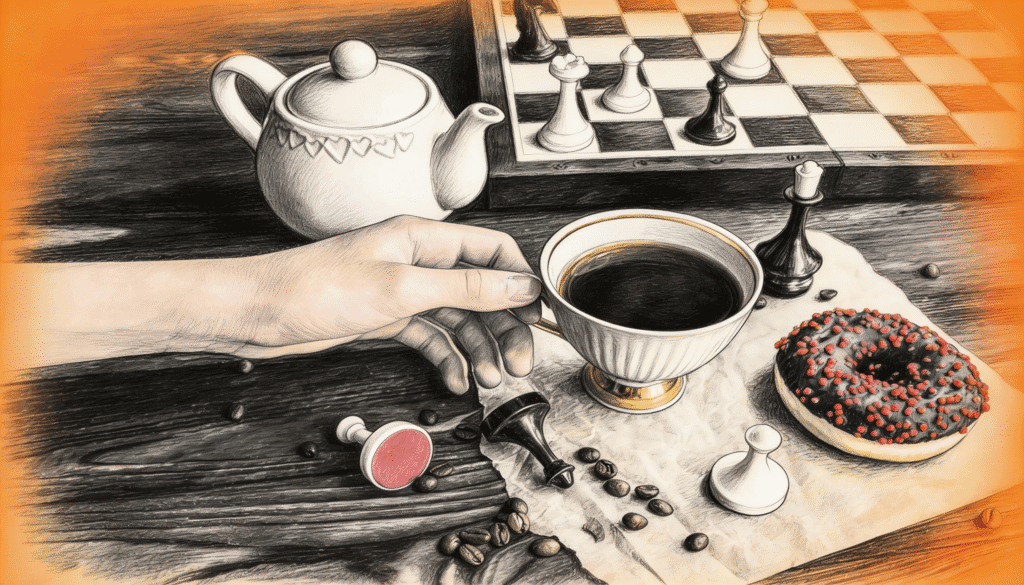
By mid-morning, most people face a choice. The brain feels foggy. Concentration wobbles. Another cup of coffee sits there as an option, steam rising like a small promise of clarity. But there’s another path, one that doesn’t involve caffeine jitters or that weird feeling when the heart starts doing a drum solo. Fifteen minutes of chess tactics might sound like an odd alternative to coffee, but the brain responds to it in ways that make that third cup look like amateur hour.
The Problem With Cup Number Three
Coffee works. Nobody disputes this. The first cup flips the switch from zombie to human. The second cup provides legitimate fuel for actual work. But the third cup enters murky territory. The body already has plenty of caffeine coursing through it. Adding more doesn’t create more alertness, it just creates more noise in the system.
Research on caffeine tolerance shows that regular coffee drinkers need increasing amounts just to feel normal, not to feel enhanced. That third cup often delivers diminishing returns. The heart rate picks up, but the mind doesn’t necessarily sharpen. Hands might get a little shaky. Focus can actually scatter rather than concentrate. And then comes the crash, that afternoon slump where productivity goes to die.
The body treats caffeine like a drug because it is one. Adenosine, the chemical that makes humans feel tired, gets blocked by caffeine. This works beautifully until the caffeine wears off and all that accumulated adenosine comes flooding back, often with friends. The result is fatigue worse than what started the whole coffee journey in the first place.
What Happens When the Brain Solves Puzzles
Chess tactics operate on entirely different machinery. When someone sits down to solve a tactical puzzle, multiple brain regions light up like a city at night. The prefrontal cortex, responsible for planning and decision making, kicks into high gear. The parietal lobe handles spatial reasoning and pattern recognition. The temporal lobe manages memory retrieval, pulling up similar positions from the mental database.
This isn’t passive stimulation. Solving tactics requires active engagement. The brain must calculate, evaluate, and decide under constraints. Each puzzle presents a problem with a concrete solution, creating a feedback loop that keeps the mind locked in. Unlike scrolling through social media or reading emails, tactical training demands full presence.
The beautiful thing about this process is that it generates natural alertness. No chemicals needed. The brain produces its own cocktail of neurotransmitters when engaged in challenging problem solving. Dopamine flows when patterns emerge from chaos. Norepinephrine sharpens focus. Serotonin provides a sense of satisfaction when the right answer clicks into place.
The Architecture of Thinking
Chess tactics teach the brain how to think in frameworks. Every position contains layers of possibility. Pieces interact with other pieces. Threats emerge and dissolve. The mind learns to process information hierarchically, sorting relevant details from noise.
This skill transfers. The executive functioning required to solve a chess tactic mirrors the kind of thinking needed for complex real world problems. Break down the situation. Identify key elements. Consider possible approaches. Evaluate outcomes. Make a decision. The brain rehearses this sequence dozens of times in fifteen minutes of tactics practice.
The Attention Economy
Modern life assaults attention from every angle. Notifications ping. Emails accumulate. Messages demand responses. The brain fragments its focus into tiny shards, never fully committing to any single task. This creates a particular kind of exhaustion that coffee can’t fix because it isn’t caused by lack of energy. It’s caused by lack of coherent mental activity.
Tactics force unified attention. A puzzle sits there with one question: what wins? The mind cannot split itself across multiple tasks and solve the puzzle effectively. This creates a kind of mental cleansing. For fifteen minutes, attention coheres around a single challenge. The constant scatter stops.
Pattern Recognition as Power
The human brain is a pattern recognition machine. Evolution designed it to spot threats, identify opportunities, and make quick decisions based on incomplete information. Modern life doesn’t provide enough quality material for this machinery to work on. Tactics provide exactly the right kind of mental nutrition.
Each tactical puzzle contains patterns within patterns. A piece placement suggests certain possibilities. Material imbalances point toward specific strategies. The relationship between attackers and defenders creates a mathematical equation that the mind learns to solve intuitively.
Over time, these patterns become second nature. The brain develops shortcuts, ways of processing complex information quickly and accurately. This skill doesn’t stay confined to the chessboard. Pattern recognition improves across domains. Market trends, social dynamics, logical arguments all benefit from a brain trained to see underlying structures.
The Chemistry of Achievement
Coffee provides a chemical shortcut to alertness. Tactics provide something more sustainable. When the brain successfully solves a problem, it releases dopamine as a reward. This isn’t the artificial spike from stimulants. This is earned satisfaction from genuine achievement.
The difference matters. Caffeine induced alertness comes with a bill due later. Dopamine from problem solving reinforces the behavior without negative side effects. The brain learns to crave challenge and growth rather than chemical assistance. This creates a positive feedback loop where mental exercise feels rewarding rather than effortful.
Research on motivation shows that achievement based rewards produce longer lasting behavioral changes than external rewards. A chess tactic solved is a small victory, but the brain treats it seriously. That sense of “I figured it out” creates motivation to tackle the next challenge and the one after that.
The Speed of Thought
Tactical training teaches the brain to process information faster. Not through artificial acceleration, but through efficiency. The mind learns what matters and what doesn’t. Irrelevant details get filtered out automatically. Essential patterns jump forward into consciousness.
This mental speed comes from thousands of micro decisions. Should this piece be considered a threat? Does this square matter? What changes if this element enters the equation? The brain makes these calculations constantly during tactics practice, each one training the neural pathways to work faster.
Professional chess players can evaluate positions in seconds that would take beginners minutes to process. This isn’t because they think faster in raw terms. It’s because they’ve trained their brains to recognize what requires deep calculation and what can be assessed instantly through pattern matching. Fifteen minutes a day builds this skill incrementally.
Stress Without Distress
The body needs good stress. Not the chronic, grinding stress of deadlines and obligations, but the acute, manageable stress of challenges that can be overcome. Tactics provide this perfectly calibrated difficulty.
Each puzzle presents a problem just beyond current ability. The difficulty creates tension, but the solvability creates hope. This combination produces what psychologists call “optimal stress,” the kind that stimulates growth without causing harm. The brain releases cortisol briefly to mobilize resources, then releases reward chemicals when the problem gets solved.
This trains stress resilience. The mind learns that difficulty doesn’t equal disaster. Challenging situations become opportunities rather than threats. This mental frame carries over into life outside chess. A trained brain approaches problems with confidence instead of anxiety.
Memory That Actually Works
Coffee doesn’t improve memory. It can help maintain alertness while trying to remember things, but the memory formation itself doesn’t benefit. Tactics training actively enhances memory through several mechanisms.
First, solving puzzles requires working memory. The mind must hold multiple pieces of information simultaneously while testing different possibilities. This constant exercise strengthens working memory capacity. Second, successful solutions create strong memory traces. The brain remembers what worked, building a library of effective patterns.
The Fifteen Minute Sweet Spot
Why fifteen minutes specifically? Because it’s long enough to matter and short enough to sustain. The brain can maintain peak focus for limited periods. Fifteen minutes falls within the window where attention stays sharp and effort feels manageable.
This duration also fits into daily life. Nobody needs to clear an afternoon for tactics practice. Fifteen minutes exists in the gap between meetings, during a lunch break, or before starting the evening. The accessibility removes barriers to consistency.
Consistency matters more than duration. Fifteen minutes daily outperforms hour long sessions once a week. The brain benefits from regular stimulation, not occasional marathons. Small, repeated doses of challenge create lasting changes in neural structure and function.
When Coffee Meets Tactics
None of this argues against coffee entirely. Coffee has its place. The first cup in the morning serves a legitimate purpose. The occasional afternoon coffee can provide a useful boost. The problem is relying on caffeine when the brain needs something else entirely.
The ideal approach combines both tools intelligently. Coffee provides chemical assistance when needed. Tactics provide mental training that builds lasting capability. Using tactics as the go to tool for mental sharpening, and coffee as occasional support, creates a better balance than three cups before noon.
The Choice Point
That moment of brain fog represents a decision point. Reach for another cup of coffee, or spend fifteen minutes on tactical puzzles. One path offers temporary relief through chemistry. The other path offers genuine improvement through practice.
The coffee provides a quick fix. The tactics provide growth. Quick fixes have their place, but growth compounds over time into something more valuable. A brain trained through regular tactical practice doesn’t need as many quick fixes. It operates more effectively on its own power.
The irony is that tactics feel harder than pouring coffee. They require effort and engagement. But this difficulty is exactly what makes them valuable. Easy doesn’t build capability. Challenge does. The brain grows through resistance, not through shortcuts.
Building the Habit
Starting a tactics practice takes less than downloading an app or opening a book. The barrier is mental, not practical. The brain resists effort until effort becomes routine. The first week feels like work. The second week feels slightly easier. By the third week, something shifts. The practice starts feeling less like obligation and more like opportunity.
This transition happens because the brain begins experiencing the benefits firsthand. Focus improves. Problem solving gets easier. That foggy feeling that prompted the third cup of coffee occurs less frequently. The cause and effect relationship becomes obvious through direct experience.
Coffee and tactics aren’t really competitors. They serve different purposes. Coffee manipulates brain chemistry temporarily. Tactics train brain function permanently. One is a tool for the moment. The other is an investment in capability.
The better comparison is between different approaches to mental performance. Chemical enhancement versus skill development. Quick fixes versus sustainable growth. Both have roles, but one builds something lasting while the other simply borrows from tomorrow to pay for today.
A brain sharpened by regular tactical practice needs less artificial boosting. It operates more efficiently at baseline. Clarity becomes the default rather than something that requires chemical intervention. This doesn’t eliminate the appeal of coffee, but it does change the relationship with it.
The Verdict
Fifteen minutes of chess tactics won’t replace coffee entirely, and it shouldn’t try. But when the choice is between a third cup and a brief mental workout, the tactics win on every metric that matters beyond the next fifteen minutes. The coffee provides borrowed energy. The tactics provide earned improvement.
The brain deserves better than constant chemical intervention. It deserves challenge, growth, and the satisfaction of solving problems through its own power. Tactics provide this in convenient, daily doses. The cumulative effect transforms not just chess skill but thinking capacity in general.
Next time brain fog rolls in and that third cup beckons, try fifteen minutes of tactics instead. The answer to mental fatigue isn’t always more stimulation. Sometimes it’s better engagement. The brain knows the difference, and it rewards accordingly.