Table of Contents
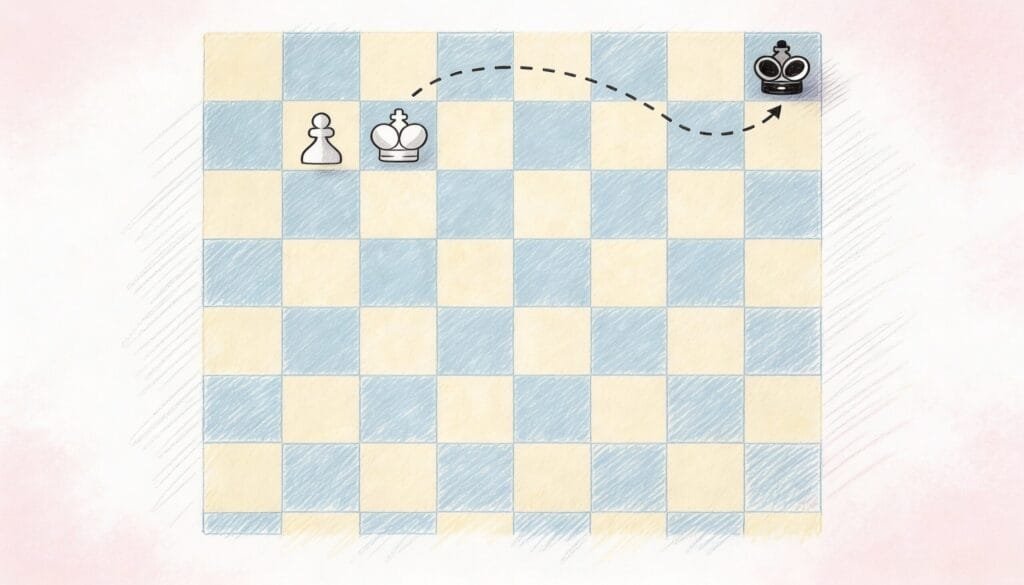
Picture this: the board is nearly empty. Dozens of pieces that once crowded the battlefield have vanished, traded away in the heat of combat. What remains? Two kings and a single pawn. Nothing else. Just three pieces on 64 squares.
This is the moment many chess players dread. Not because the position is complicated, but because it looks deceptively simple. And yet, more games are thrown away in king and pawn endgames than perhaps any other phase of chess. The tragedy? Most of these losses are completely avoidable.
The king and pawn versus king endgame is chess at its most elemental. Strip away all the tactics, all the complications, all the noise. What’s left is pure strategy, raw calculation, and the kind of fundamental understanding that separates the student from the master.
Why This Endgame Matters More Than You Think
Every chess player, from the casual club member to the titled master, will face this endgame dozens, if not hundreds, of times throughout their playing years. Tournament games that began with brilliant opening preparation and clever middlegame maneuvering often boil down to this most basic of showdowns.
The cruel irony? While players spend countless hours memorizing opening variations and studying tactical puzzles, many neglect the very endgame they’re most likely to encounter. They treat it as too simple to warrant serious study. This assumption costs them dearly.
Understanding king and pawn versus king isn’t just about winning these specific positions. The concepts learned here form the foundation for more complex endgames. Master this, and suddenly positions with multiple pawns become less mysterious. The patterns repeat, the ideas echo, the principles compound.
The Two Questions That Decide Everything
When facing king and pawn against a lone king, only two questions matter:
Can the pawn promote to a queen?
Can the defending king stop it?
Everything else is commentary. Every rule, every principle, every strategic consideration flows from these two fundamental questions. The entire endgame is a race between the pawn’s march forward and the defending king’s desperate sprint to intercept it.
But here’s where chess reveals its depth. What seems like a straightforward race becomes a sophisticated dance. Position matters more than material. A single square can mean the difference between victory and draw. Timing becomes everything.
The Geographic Reality of the Chessboard
Imagine the chessboard as a landscape with different terrains. Some areas offer natural advantages. Others spell doom. The pawn’s starting position isn’t just a coordinate. It’s a statement about the entire character of the endgame to follow.
A pawn on the second rank has a long journey ahead. It needs protection, guidance, nurturing. The attacking king must shepherd it carefully, watching for threats from every angle. One misstep and the defensive king crashes the party, blockading the pawn and forcing a draw.
A pawn further advanced, say on the sixth rank, tells a different story. It’s already knocking on the door of promotion. The defending king faces desperate measures. Every move counts. The margin for error has shrunk to almost nothing.
The Invisible Square That Changes Everything
Chess teachers often introduce beginners to something called the square of the pawn. This isn’t a physical square marked on the board. It’s an imaginary zone, a geometric construct that instantly reveals whether the defending king can catch a pawn racing toward promotion.
Here’s how it works: imagine drawing a square from the pawn to the promotion square. If the defending king can step inside this square on its turn, it can catch the pawn. If not, the pawn promotes. Simple geometry becomes the arbitrator of victory and defeat.
This rule provides instant clarity in many positions. No calculation needed. Just count squares, visualize the zone, and the answer reveals itself. The pawn races forward, but mathematics doesn’t lie. Either the king makes it in time, or it doesn’t.
But chess wouldn’t be chess if things stayed that simple. The square of the pawn tells you whether the king can catch an unsupported pawn. It says nothing about what happens when the attacking king joins the fight. And that’s where the real chess begins.
The King’s True Power Revealed
For most of the game, kings hide in corners, sheltered behind walls of pawns and pieces. They’re fragile, vulnerable, targets to be protected at all costs. But in the endgame, everything changes. The king transforms from liability to powerhouse.
In king and pawn endgames, the king becomes the most active piece on the board. It attacks, defends, controls key squares, and makes things happen. A well placed king is worth more than any tactical trick or clever plan.
The attacking king has one primary job: support the pawn’s advance. It must clear the way, protect its charge, and help create a clear path to promotion. But it can’t just push from behind. Effective support means getting in front, controlling critical squares, forcing the defending king backward.
The defending king, meanwhile, fights a desperate holding action. It must blockade the pawn, prevent the attacking king from gaining ground, and hold the position. If it can get in front of the pawn and stay there, a draw becomes possible. Let the attacking king infiltrate past its defenses, and the game is lost.
Opposition: The Subtle Art of Facing Off
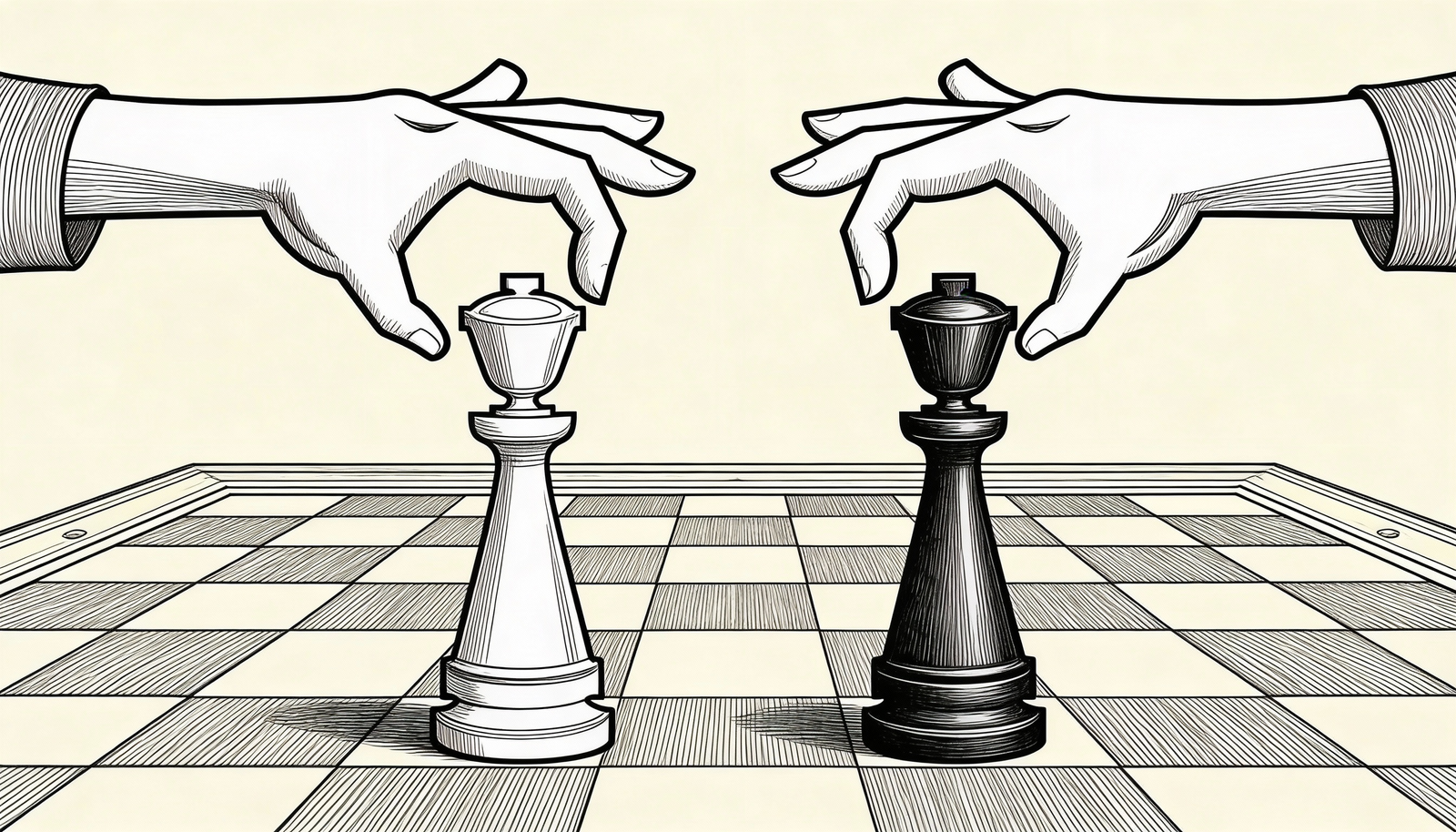
When two kings stand directly facing each other with one square between them, chess players call this opposition. It sounds simple. It looks simple. But opposition is where king and pawn endgames reveal their deepest secrets.
The player who has opposition forces their opponent to move first. And in king endgames, moving first often means moving backward. It’s a game of chicken played on a chessboard. Whoever blinks first loses critical ground.
Opposition comes in different flavors. Direct opposition happens when kings face each other on the same file with one square between. Distant opposition happens when they’re further apart but maintain that key relationship. The specific distance matters less than the pattern.
Here’s where it gets interesting: opposition isn’t just about the current position. It’s about tempo, timing, and who moves when. A player who understands opposition can force draws from inferior positions or squeeze wins from positions that look drawn. It’s chess at its most refined.
The attacking side generally wants opposition when the defending king blocks the pawn. This forces the defender backward, allowing the pawn to advance. The defending side wants opposition to hold ground and prevent the attacker from making progress.
Key Squares: The Real Estate That Matters
Not all squares are created equal. Certain squares on the chessboard hold special significance in king and pawn endgames. Control these squares and victory follows. Lose them and draws or losses loom.
These critical squares sit in front of the pawn, usually two or three squares ahead. If the attacking king can occupy one of these key squares while supporting the pawn, promotion becomes inevitable. The defending king simply cannot mount an effective defense.
Think of these key squares as high ground in a battlefield. Control the high ground and you control the engagement. The defending king fights to keep the attacker off these squares. The attacking king maneuvers to occupy them. Everything else is preparation for this central struggle.
The number and location of key squares depends on the pawn’s position. Different pawns, different key squares. But the principle remains constant: control them or lose the game.
The Dance of Triangulation
Sometimes in king and pawn endgames, the position looks stuck. Neither side can make progress. The kings face each other, the pawn can’t advance, and it seems like nothing will change. But then one side performs a curious maneuver. The king moves in a triangle, returning to its starting square but with the opponent to move instead.
This technique, called triangulation, is tempo manipulation at its finest. By moving in three steps instead of two, the king effectively passes the turn to the opponent. And in positions where moving is a disadvantage, this forces the opponent into zugzwang, that delicious German word meaning “compulsion to move.”
Zugzwang is when any move worsens your position. Your king is perfectly placed, but it’s your turn, and any move you make loses ground. Triangulation creates zugzwang. It’s not flashy, but it’s devastating.
Understanding triangulation separates intermediate players from advanced ones. It requires seeing three moves ahead, recognizing that returning to the starting position can be progress, and understanding that sometimes the journey matters more than the destination.
When Drawing Becomes the Goal
Not every king and pawn endgame is about winning. Sometimes, with accurate defense, the game should end in a draw. Recognizing these positions is just as important as knowing how to win the winning ones.
The defending side should aim to blockade the pawn as quickly as possible. Get the king in front of the pawn and maintain opposition. This creates maximum resistance. Even if the attacking king is well placed, a properly executed blockade often holds.
Certain positions are theoretically drawn no matter how well the attacking side plays. If the defending king reaches the square directly in front of the pawn before the attacking king can control key squares, the draw is usually assured. The blockade holds, opposition maintains the status quo, and neither side can make progress.
Knowing when to offer a draw or accept one requires understanding these theoretical positions. Don’t play on in a drawn position hoping the opponent blunders. But equally, don’t accept a draw in a position you should be winning. Theory provides the roadmap.
Practical Wisdom for Real Games
Theory is beautiful, but games aren’t played in textbooks. Real positions get messy. Emotions run high. Clock pressure mounts. Fatigue sets in. This is when understanding the principles really matters.
First principle: activate the king early. Too many players leave their king passive until it’s too late. In endgames, especially king and pawn endgames, the king should be the most active piece. Centralize it, push it forward, use it aggressively.
Second principle: push the pawn at the right moment. Premature pawn pushes can weaken the position. The pawn should advance when the king controls enough space to support it. Patience matters. The pawn isn’t going anywhere, but a poorly timed advance creates weaknesses.
Third principle: calculate completely. King and pawn endgames look simple, but they demand precise calculation. One tempo can make all the difference. Work out the race to the last move. Visualize the key positions. Don’t guess when you can calculate.
Fourth principle: know the basic theoretical positions cold. The defending king in front of the pawn and the attacker having opposition. The attacking king on a key square. The rook pawn fortress. These patterns repeat endlessly. Internalize them and decisions become automatic.
The Psychological Dimension
There’s a psychological element to king and pawn endgames that doesn’t get discussed enough. Many players feel anxiety when the position simplifies to this level. The safety net of tactics and combinations disappears. Mistakes become stark and obvious.
This anxiety leads to errors. Players rush their moves, trying to get past the uncomfortable moment. Or they second guess their knowledge, deviating from sound principles because the position “feels” wrong. Confidence matters here. Trust the fundamentals.
Conversely, the player who knows these endgames feels confidence surge when everything trades off. What the opponent fears, they welcome. This psychological advantage translates into better moves, clearer thinking, and ultimately, more wins and draws.
The Path Forward
Mastering king and pawn versus king endgames doesn’t happen overnight. It requires study, practice, and repetition. But the investment pays dividends across your entire chess game.
Start by learning the basic theoretical positions. Understand when the pawn promotes and when the defense holds. Practice these positions against friends or a computer until the patterns become second nature.
Then study the concepts: opposition, key squares, triangulation. See how they apply in different positions. Work through examples until the principles stick.
Finally, play out these endgames in your games. Don’t avoid them or offer quick draws. Test your knowledge against real opponents. Make mistakes, learn from them, and gradually build mastery.
The beauty of king and pawn endgames lies in their purity. No tricks, no shortcuts, just fundamental chess understanding. Three pieces, 64 squares, and the eternal question: can the pawn promote?
Chess is ultimately about understanding patterns, recognizing critical moments, and executing plans with precision. Nowhere is this more true than in the king and pawn versus king endgame. Simple in appearance, profound in reality, this endgame encapsulates everything beautiful about chess.
So the next time the board clears and you’re left with two kings and a pawn, don’t panic. Don’t sigh. Instead, smile. This is your moment. This is where knowledge and preparation meet opportunity. This is where the game is won or drawn, one square at a time.