Table of Contents
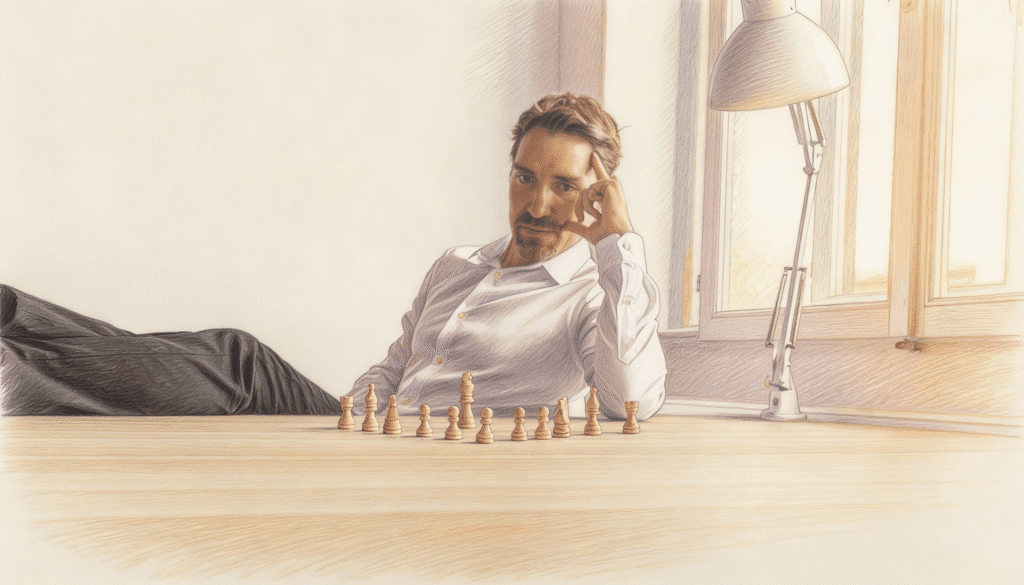
The executive stared at the board, hand hovering over his bishop. His opponent had left an opening in the center. One move and he could seize control, pressure the position, maybe force a quick resignation. His fingers touched the piece. Then something made him stop.
Six months earlier, that same person would have played the move without hesitation. He would have grabbed the initiative, forced the action, and felt brilliant for exactly thirty seconds. Then his opponent would have sprung the trap. The bishop would be lost. The game would collapse. Another expensive lesson.
But chess has a particular way of teaching lessons that transfer.
We operate in a world that rewards speed over thought. Every email expects an immediate reply. Every meeting demands quick decisions. Every market opportunity requires instant action or someone else will grab it. The entire professional landscape seems designed around the premise that hesitation equals weakness and velocity equals value.
This creates a dangerous pattern. Our minds start operating like we are managing our inbox, making snap judgments based on surface data. We see an attractive deal and we chase it. We feel confident and we commit. We want the outcome and we grab for it, consequences be addressed later.
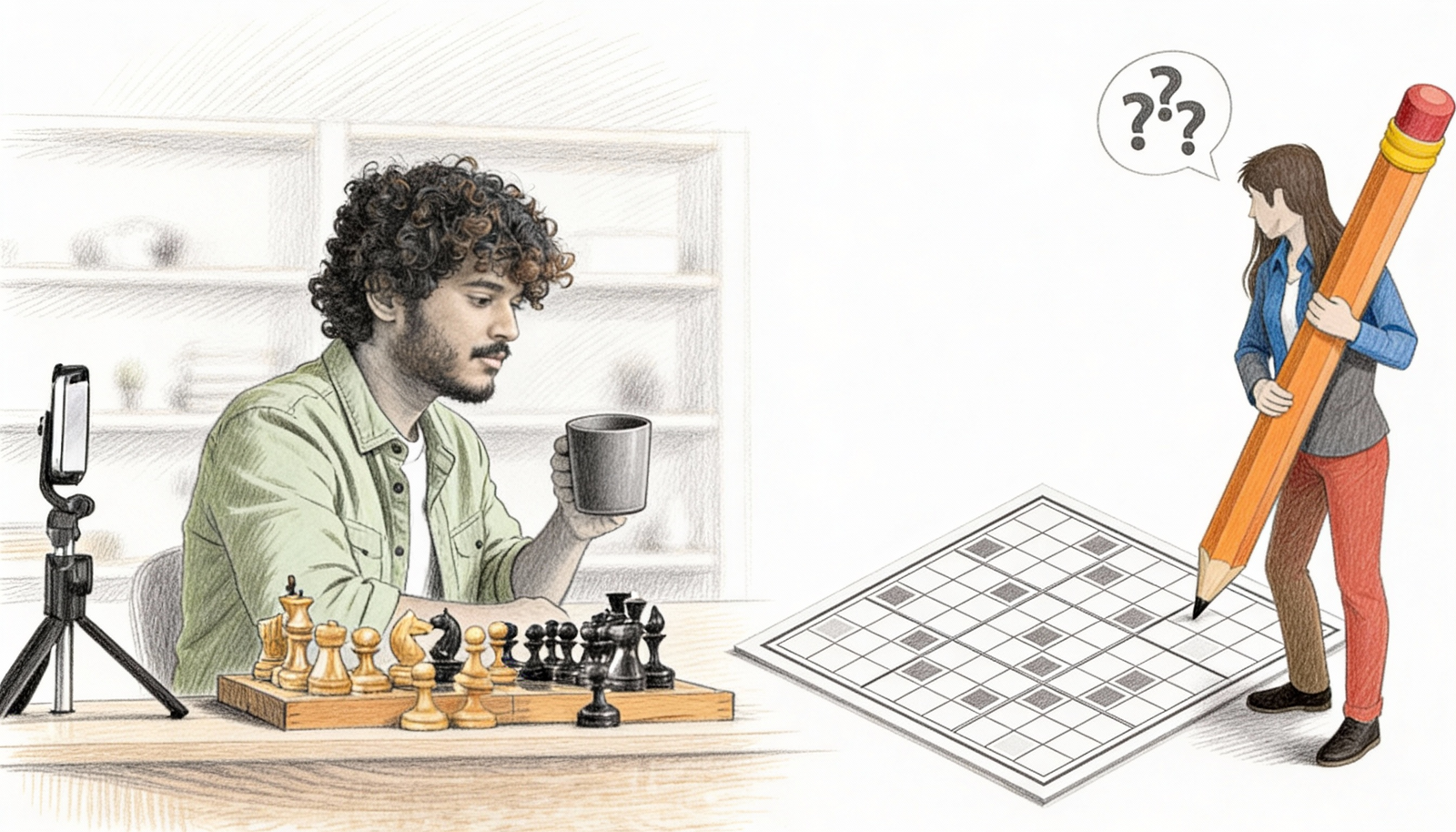
Then we sit down at a chess board.
The First Honest Feedback
Chess does not accommodate your narrative. The board will not bend its logic because you have a deadline. Your opponent will not concede because you really need this win for your confidence. Make a reckless move and the position punishes you with cold precision.
This differs from most professional environments where consequences arrive slowly. Send a rash email and you might not see the damage for weeks. Make a hasty hiring decision and the problems emerge over months. Chase the wrong opportunity and the cost becomes clear only after you have invested serious resources.
Chess compresses the timeline. The feedback is immediate and absolute. You cannot explain away a lost piece. You cannot reframe a ruined position as a learning experience while pretending you meant to do it. The game forces honesty about cause and effect.
Every chess game is practice in not doing the first thing that seems appealing. You practice considering alternatives. You practice asking what happens after the immediate result.
The Pattern Recognition Engine
After losing material a few times to similar tactical motifs, something shifts in your cognition. You start recognizing configurations. The next time you see that piece arrangement, recognition triggers before action. Your hand pauses. Your mind whispers “this looks like that situation where everything fell apart.”
This is not expertise. This is basic pattern matching, the same cognitive function that keeps you from repeating obvious mistakes. But chess provides a compressed environment to build this skill across hundreds of different scenarios.
The reckless professional sees an opportunity and acts. The chess player sees an opportunity and asks three questions: Why is this available? What am I not seeing? What happens after I take it?
These questions become automatic. They start appearing in professional contexts.
A vendor offers terms that seem unusually favorable. The reactive response is to sign immediately before they reconsider. The chess response is to wonder why these terms are available when they should not be. What does the vendor know that you do not? What happens three quarters from now?
A candidate interviews exceptionally well and pushes for an immediate offer. Reactive response: secure the talent before someone else does. Chess response: consider whether the pressure indicates genuine demand or a red flag. What is the actual position here?
The game teaches you that attractive options frequently contain hidden costs. The obvious play is often the wrong play. The appealing capture is sometimes bait. This lesson costs you nothing but time when you learn it over a chess board. It can cost you your career when you learn it at work.
The Consequence Chain
Chess players calculate variations. This means thinking through sequences: if I play here, they respond there, then I continue here, then they counter there. Beginners see perhaps one or two moves ahead. Intermediate players see four or five. Strong players see further, but the exact depth matters less than the principle.
The principle is simple: actions generate consequences that generate further consequences.
Reckless professionals treat decisions as if they exist in isolation. They see only the immediate outcome. Sign the client, get the revenue. Send the aggressive message, feel powerful. Leave the job, escape the frustration. The cascading effects beyond that first result do not feature in their mental model.
Chess makes the chain visible. You cannot play chess without considering second-order effects. The game demands it. Play thinking only about the immediate capture and you will lose to anyone thinking one step further. Guaranteed.
This creates an interesting dynamic. Chess is merely a game, yet it demands more rigorous analysis than many people apply to actual career decisions. The stakes are zero. The quality of thinking is maximum. And somehow, that thinking starts appearing in real decisions.
A research found that students who received chess instruction showed improved planning and foresight skills that transferred to academic tasks. The students improved at decomposing complex problems into sequential steps. They got better at anticipating obstacles before encountering them.
This makes sense. Once your brain learns to think in sequences, the habit persists. The neural pathways strengthen. The behavior becomes default.
The Tactical Obsession
Every chess player discovers tactics eventually. These are the clever combinations, the brilliant sacrifices, the stunning sequences that win material or deliver checkmate. Tactics are intoxicating. They generate the feeling of intelligence. They create those satisfying moments where everything clicks.
The problem is that developing players often become addicted to seeking tactics. They scan every position hoping to find the brilliant move, the knockout blow, the devastating combination. This is recklessness wearing a clever disguise.
Mature chess understanding recognizes that most positions contain no brilliant tactics. Most positions require patient maneuvering, gradual improvement, quiet moves that prepare future possibilities. The spectacular stuff happens, but only when the accumulated small advantages support it.
This maps directly onto professional life. Reckless professionals are always hunting for the big play, the dramatic pivot, the brilliant shortcut. They want the tactics without the strategy. They want the breakthrough without building the conditions that make breakthroughs possible.
Reality operates on chess principles. You do not get the dramatic promotion without years of solid performance. You do not get the successful venture without building the foundation that makes success achievable. The spectacular moments emerge from patient accumulation of advantages.
Chess teaches this through direct experience. Chase tactics when none exist and you weaken your position. Make random aggressive moves hoping something works and you create vulnerabilities. The board punishes wishful thinking. The board rewards systematic construction.
The Emotional Discipline
Imagine blundering away a piece through pure carelessness. You saw the threat, considered defending, then moved a different piece entirely for reasons that make zero sense immediately afterward. The piece is gone. The position is probably lost. The game is likely over.
What happens next reveals your decision-making foundation.
The reckless response is emotional. Frustration, anger, the compulsion to do something dramatic to recover the material immediately. This leads to more reckless moves. Soon you are not down a piece, you are down everything. The position collapses completely.
The chess response is different. Yes, the frustration exists. Yes, the mistake is real. But compounding errors does not fix the first one. The best continuation might be solid defense, making your opponent work for the victory, possibly hoping they overreach when they sense blood.
This is emotional regulation under pressure. Not the elimination of emotion, but the refusal to let emotion dictate action. The feeling exists, but it does not control behavior.
Psychologists call this capacity emotional regulation. The ability to experience something without immediately acting on it. To feel anger without retaliating. To feel anxiety without fleeing. To feel temptation without capitulating.
Chess builds this capacity because chess constantly generates emotions. Every game includes moments of hope, concern, excitement, disappointment. You cannot play chess without experiencing these states. But you can learn to experience them without letting them control your moves.
Chess creates an environment where emotional reactions have obvious, immediate costs. Get frustrated and make a revenge move, lose more material. Let anxiety drive premature action, damage your position. Feel overconfident and relax your vigilance, get punished. The feedback is instant and unambiguous.
Over time, your cognition adapts. The emotional impulse arises, but another part of your mind says “wait, remember what happens when we do this.” The pause extends. The reaction becomes less automatic. The recklessness diminishes.
The Activity Illusion
Here is a subtle trap that catches many developing chess players. They confuse activity with progress. They move pieces rapidly around the board, creating threats, applying pressure, maintaining activity. This feels productive. It feels dynamic and energetic and purposeful.
Meanwhile, their opponent makes fewer moves, positions pieces deliberately, builds solid structure. This looks passive. It looks boring. It looks like nothing significant is happening.
Then suddenly the position resolves. All that frantic activity led nowhere useful. All those threats were superficial. The solid structure prevails because structure defeats chaos when chaos lacks foundation.
This lesson applies throughout modern professional life. We are surrounded by people who confuse motion with progress. They are always busy, always moving, always doing something. They pride themselves on their responsiveness and activity level. They judge others who seem less frantic.
But activity without direction is just noise. Movement without purpose is just wandering. Doing many things poorly does not equal doing the right things well.
Chess makes this visible in ways that professional life often obscures. You can see the board. You can evaluate the pieces. You can assess who actually controls the critical squares, who has superior structure, who will prevail when the position clarifies. The player making dramatic moves might feel good in the moment, but the position does not lie.
Learning this distinction changes behavior. You start asking not “am I doing something” but “am I doing the right thing.” You start valuing quality of action over quantity. You start recognizing that sometimes the best move is quiet, solid, even boring.
The reckless professional is always in motion because stillness feels like stagnation. The chess player understands that sometimes you improve your position by waiting, by patience, by letting your opponent create weaknesses through their own impatience.
Converting Advantages
Every chess player has experienced this scenario. You are winning. Your position is superior. You have more material or better piece placement or both. Victory is approaching. You just need to convert the advantage.
And then you get careless. You stop calculating as rigorously. You make assumptions. You rush. Suddenly your opponent has counterplay. The win becomes a draw. Sometimes the draw becomes a loss. You threw away a won position through sheer recklessness near the finish.
This hurts worse than losing from the opening. This is snatching defeat from victory. This is self-sabotage in its clearest form.
But it teaches a crucial lesson: the game continues until it ends. Maintaining discipline at the finish is as important as maintaining it at the start. Perhaps more important, because overconfidence is more dangerous than nervousness.
Professional life is full of people who cannot finish what they start. They get 80% through a project and lose focus. They build a successful business then make reckless decisions that damage it. They achieve a goal then immediately sabotage themselves with poor choices.
Chess prevents this through direct experience. Lose enough won games and you learn. You learn to maintain focus until the actual end. You learn that advantages evaporate if you stop protecting them. You learn that your opponent is dangerous until they resign, regardless of how lost their position appears.
This translates into persistence and discipline. The capacity to maintain standards when fatigued. The refusal to cut corners when the finish line is visible. The understanding that most advantages disappear if you do not defend them carefully.
The Humility Requirement
Chess has an efficient way of destroying arrogance. You might defeat players at your level consistently, develop a solid winning record, start feeling quite competent. Then you play someone slightly stronger and they dismantle you effortlessly. Not dramatically, not with fireworks, just with steady, capable play that makes your best efforts look amateur.
This experience is humbling in the productive sense. It demonstrates that competence exists on a spectrum and you are not as far along that spectrum as you assumed. More importantly, it shows you that recklessness often stems from overestimating your own understanding.
You make the reckless move because you think you have calculated everything. You think you see the whole position. You think your opponent has no resources. Then reality corrects you. Your calculation had a gap. You missed a defensive option. Your opponent was better than you assessed.
The cumulative effect of these lessons is humility. Not insecurity, not self-doubt, but realistic assessment of your own capabilities and limitations. This is essential for avoiding recklessness.
Reckless professionals often act on false confidence. They commit before understanding because they assume they can handle whatever emerges. They take unnecessary risks because they overestimate their ability to manage consequences. They rush into situations they do not comprehend because they assume comprehension is optional.
Chess corrects this by making the costs of overconfidence immediate and visible. You cannot pretend you won when you lost. You cannot pretend the move was good when it lost your queen. The board is honest even when you want to deceive yourself.
Over time, this builds calibration. You improve at knowing what you know and what you do not know. You improve at recognizing when you need more information before acting. You improve at admitting uncertainty instead of performing certainty.
This makes you less reckless because recklessness requires either ignorance or false confidence. Chess attacks both. It reduces ignorance through experience. It strips away false confidence through feedback. What remains is competence, actual skill based on actual understanding.
The Transfer Question
The obvious question is whether any of this actually transfers to professional life. Does being less reckless at chess make you less reckless in business decisions?
The skills develop through chess, but you must consciously apply them to other domains. The neural pathways strengthen, but you still need to activate them in the appropriate context. This makes sense. Your brain learns to calculate sequences during chess. But you must consciously invoke that same cognitive style when making a strategic business decision or investment choice. The capability develops. The automatic application does not.
The positive aspect is that conscious practice builds automaticity. Apply chess thinking deliberately in professional situations enough times and it becomes more natural. The pause before acting becomes habitual. The question “what happens next” becomes reflexive. The scan for hidden consequences becomes automatic.
This is where the genuine value emerges. Chess provides a training ground for building better decision-making habits. The stakes are low, the feedback is clear, the practice is engaging. You develop mental disciplines in a safe environment, then export those disciplines to situations that actually matter.
…
The executive at the start of this article, the one who stopped before playing his bishop, learned something valuable. He learned that the first impulse is often wrong. He learned that attractive options deserve scrutiny. He learned that consequences extend beyond the immediate result.
These lessons came from a board game. But they apply to everything. Whether you are evaluating a merger, a partnership, a career transition, or just what to say in a tense negotiation, the chess mindset helps. Pause. Consider alternatives. Think through consequences. Ask what you might be missing.
This is the opposite of recklessness. This is deliberate action based on realistic assessment. Chess does not make you timid or paralyzed by analysis. It makes you thoughtful. It makes you careful in the productive sense, the sense that means taking care, exercising judgment, treating decisions as important even when they seem routine.
The reckless professional treats decisions like they do not matter, making moves without thinking, assuming everything will work out somehow. The chess player knows better. Every move counts. Every decision has weight. The position you build today determines what becomes possible tomorrow.
And that knowledge, that fundamental understanding that actions matter and consequences are real, that might be the most valuable thing chess can teach.
Not how to win at chess, but how to approach professional life with the seriousness and thoughtfulness it deserves.