Table of Contents
The boardroom falls silent. An entrepreneur stares at quarterly projections that don’t add up. Three departments want the same budget allocation. A competitor just launched something unexpected. The clock is ticking.
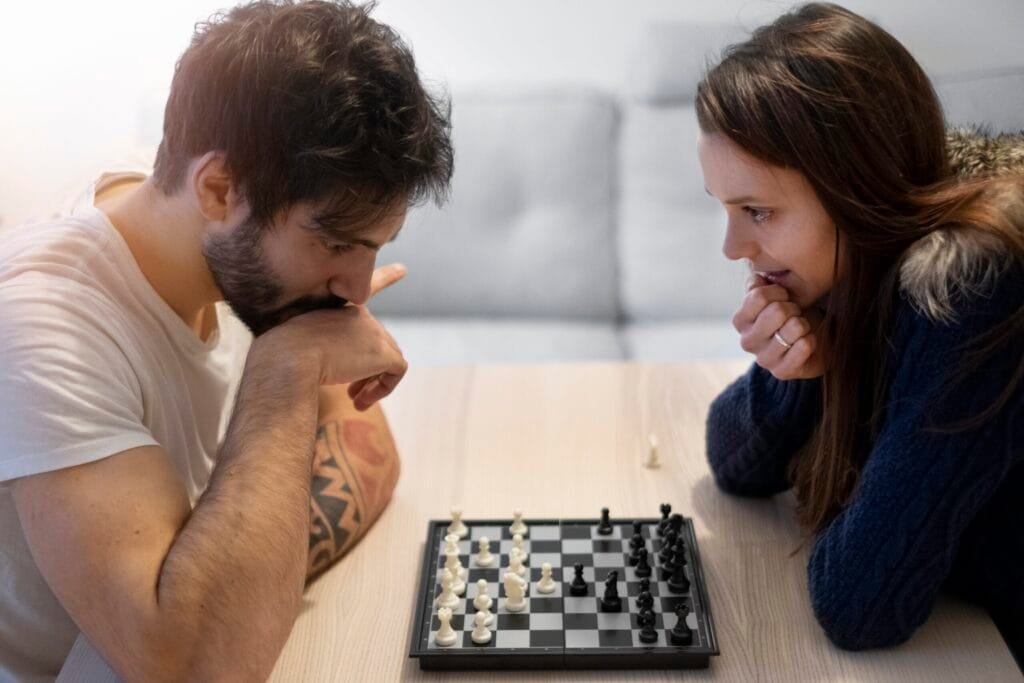
Across town, someone sits at a chess table, facing their own crisis. The position looks terrible. Pieces scattered, plans in ruins, time running low. But here’s the thing: this person has been here before. Not in this exact position, but in this exact feeling. And they know what to do next.
Business leaders love talking about strategy. They hire consultants, read case studies, attend seminars. Yet many miss the most accessible training ground for strategic thinking that exists. It sits on a simple board with 64 squares.
The Pattern Recognition Factory
Reid Hoffman, the founder of LinkedIn, once said his approach to business strategy came directly from board games. And chess is one of those board games. Not because business is like chess in any literal sense. But because chess teaches the brain to see patterns where others see chaos.
Here’s what happens during a chess game. The board presents thousands of possible moves. Most players freeze at this complexity. But experienced players don’t calculate everything. They recognize patterns. They’ve seen similar positions before. Their brain instantly filters out nonsense and highlights possibilities.
This is exactly what happens in business. A market shifts. Customer behavior changes. Technology disrupts. The entrepreneur with pattern recognition sees the shape of what’s coming. Not because they’re smarter. Because they’ve trained their brain to spot the structure beneath the surface.
Thinking in Systems, Not Steps
Most people solve problems linearly. They see step one, then step two, then step three. Chess players can’t afford this luxury. Every move changes everything. The piece that looked useless becomes critical. The plan that seemed brilliant falls apart.
This is called systemic thinking. It means understanding how all parts of a system affect each other. Move one piece and suddenly three others have different values. Make one business decision and watch it ripple through operations, culture, and market position.
Consider a typical business scenario. A company can cut costs to improve quarterly numbers. Linear thinking says this works. Systemic thinking asks what happens next. Morale drops. Quality slips. Customers notice. Competitors gain ground. The stock price bump lasts three months. The damage lasts three years.
Chess trains this instinct daily. Every game punishes short term thinking. Every victory teaches that current sacrifice can mean future advantage.
The Art of Incomplete Information
Business decisions happen without complete data. Markets hide information. Competitors obscure intentions. Customers don’t always know what they want until they see it.
Chess players deal with uncertainty constantly. Not about the rules or pieces, but about intentions. What is the opponent planning? Why did they make that move? Is it a trap or a mistake?
This creates a fascinating skill: making optimal decisions with imperfect information. Not waiting for certainty. Not guessing wildly. Finding the choice that works across the most likely scenarios.
Chess builds this muscle. Every game forces dozens of decisions where the player can’t be sure what’s happening. Should they assume the opponent sees the threat? Should they believe that piece placement is intentional or accidental? There’s no time to find out for certain. The decision has to happen now.
Business works the same way. Launch the product or wait for more testing? Enter the market or let others go first? Trust the team’s assessment or dig deeper? Chess players develop an intuition for these choices because they make them constantly in a consequence rich environment.
Resource Allocation Under Pressure
Every business faces this challenge: limited resources, unlimited opportunities. Time, money, attention, talent. How to deploy them?
Chess presents this problem in pure form. Each player has identical resources. Sixteen pieces. Equal time. The winner is whoever allocates those resources more effectively toward their goals.
Watch a strong player and notice how they think about pieces. That knight isn’t just a piece. It’s an investment. Is it working where it sits? Could it create more value somewhere else? What’s the opportunity cost of moving it versus moving something else?
Entrepreneurs face identical questions about their resources. That senior developer on the maintenance team: could they create more value building the new feature? That marketing budget on brand awareness: would it work better on direct response? Every resource allocation is a bet about future value.
Chess makes these bets constantly visible. A piece moved to the wrong square sits there, mocking the decision. A piece in the right place multiplies the power of everything around it. The feedback is immediate and honest.
Warren Buffett famously talks about opportunity cost as the most important concept in business. Chess is an opportunity cost simulator. Every move chosen is ten other moves rejected. The game teaches players to think not just about what they’re doing but about what they’re not doing.
Embracing Inevitable Mistakes
Here’s the uncomfortable truth about chess: every game contains mistakes. Even grandmasters make them. The question isn’t whether mistakes happen but how players respond.
This matches entrepreneurship perfectly. Every business makes mistakes. Product launches fail. Hires don’t work out. Markets turn unexpectedly. The successful entrepreneur isn’t the one who avoids all mistakes. That person doesn’t exist. Success comes from recognizing mistakes quickly and adapting effectively.
Chess builds this skill through sheer repetition. A player makes a mistake. The position deteriorates. Now what? Collapse? Panic? Resign?
Strong players learn to stay calm and look for practical chances. The position might be worse, but it’s the current reality. Dwelling on the mistake wastes time and energy. The only useful question is: what’s the best move from here?
Ray Dalio built Bridgewater on this principle. His famous concept of radical transparency comes from treating mistakes as data rather than failures. Chess does this naturally. Every mistake is visible on the board. No hiding it. No pretending it didn’t happen. Just deal with the new position and play on.
The Patience Problem
Modern business culture often celebrates speed. Move fast and break things. Fail forward. Iterate rapidly. These approaches have merit. But they create a blindspot around strategic patience.
Chess players understand a different truth. Sometimes the best move is the quiet one. The preparation. The improvement. The position that doesn’t look dramatic but sets up everything that follows.
Chess teaches this patience through necessity. Rushing ahead without preparation leads to disaster. The player who improves their position slowly but surely often beats the player going for quick attacks. Not always. But often enough to learn the lesson.
This becomes especially valuable when facing long term challenges in business. Building a brand takes years. Developing organizational culture can’t be rushed. Creating genuinely innovative products requires sustained effort. The chess mindset helps entrepreneurs stay focused during these marathons.
Competitive Pressure as Teacher
Business competition creates stress. Deadlines loom. Competitors move. Markets shift. Investors question. This pressure reveals character and capability.
Chess simulates this pressure in concentrated form. Sitting across from an opponent who wants to destroy your position. A clock counting down. Every move matters. Mistakes are punished immediately. There’s nowhere to hide.
This is valuable training. Not because business is exactly like chess competition. But because the emotional experience is similar. The pressure. The self-doubt. The temptation to play it safe or take wild risks.
Regular chess players develop emotional regulation under pressure. They learn to think clearly when nervous. They practice separating ego from decision quality. They experience the full cycle of winning, losing, and learning from both.
Angela Duckworth’s research on grit shows that deliberate practice in challenging situations builds psychological resilience. Chess provides this in an accessible package. Each game is a complete cycle of challenge, decision making under pressure, and clear feedback.
The Humility Advantage
Chess has a way of destroying arrogance. Even strong players lose regularly. Even brilliant plans fall apart. Even careful preparation proves insufficient. The game simply doesn’t care about ego.
This creates an unusual mindset. Confidence without arrogance. Ambition tempered by realism. Understanding that being good doesn’t mean being perfect.
Business needs this balance. Entrepreneurs must be confident enough to take risks and convince others to follow. But humble enough to listen, learn, and adapt. Too much confidence leads to preventable disasters. Too little prevents necessary action.
Chess cultivates this balance naturally. Players develop confidence through genuine skill improvement. But every loss reminds them that confidence alone changes nothing. The board demands proof.
Building Mental Endurance
Strategy isn’t a sprint. It’s sustained focus over time. Maintaining clarity through complexity. Holding multiple considerations in mind simultaneously. Thinking several steps ahead while managing the current situation.
Chess builds exactly this capacity. A serious game requires sustained concentration for hours. The mind can’t wander. Every moment matters. But it’s not frantic energy. It’s controlled, directed focus.
This translates directly to business leadership. Running a company requires holding strategic vision while managing daily operations. Thinking about next quarter while planning for three years out. Balancing multiple stakeholder interests simultaneously.
The Decision After the Decision
Most business problems don’t have obvious solutions. Two paths look equally promising. Three strategies all have merit. How to choose?
Chess players face this constantly. Multiple moves look reasonable. Computer analysis might rate them similarly. Yet one must be chosen. The game continues only through decision.
This builds decisiveness. Not reckless decision making. Not analysis paralysis. But the ability to gather available information, make a judgment, and commit.
Annie Duke, a professional poker player turned business consultant, writes about thinking in bets. This means accepting that good decisions can have bad outcomes. And bad decisions can sometimes work out. The goal isn’t perfect results. It’s the best process for making decisions repeatedly over time.
Chess trains this perspective. Sometimes the right move loses. Sometimes a mistake wins. But over hundreds of games, quality thinking produces quality results. This long term view helps entrepreneurs stay steady through the inevitable ups and downs.
Why Now Matters More Than Ever
The business world is accelerating. Technology changes faster. Competition comes from unexpected directions. Career paths zigzag in ways previous generations never experienced.
This new reality demands exactly what chess teaches. Strategic flexibility. Pattern recognition across domains. Comfort with uncertainty. Mental resilience. Systemic thinking.
The traditional path was: learn skills, apply them for decades. The current path is: learn how to learn, adapt continuously. Chess is fundamentally about learning how to learn. Each game teaches. Each position is new. Success comes from applying general principles to specific situations.
Business leaders often look for complicated solutions to develop strategic thinking. Expensive programs. Lengthy certifications. Complex frameworks. These have value. But chess offers something simpler and deeper. Regular practice making consequential decisions in a system with clear feedback.
The entrepreneur who plays chess isn’t trying to turn business into a game. They’re building the mental capabilities that modern business demands. And they’re doing it in the most accessible strategy laboratory that exists.
That boardroom with the tough decisions? The chess player walks in with pattern recognition, systemic thinking, comfort with uncertainty, and experience making judgment calls under pressure. Not because chess has all the answers. But because chess asks many of the same questions.
And on that chessboard, with all its complexity and challenge? That’s just practice for everything that comes next.