Table of Contents
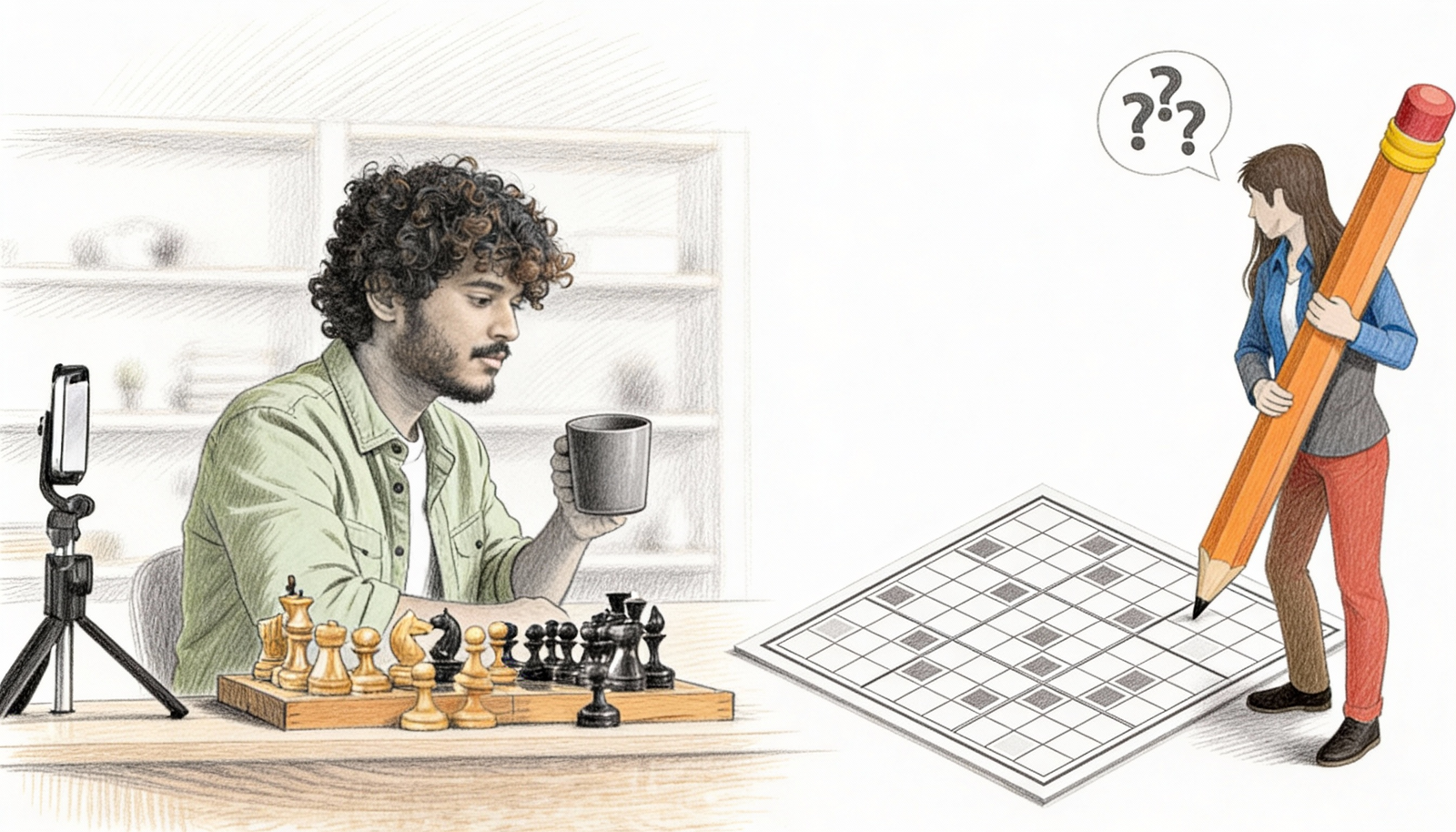
The alarm goes off at 5:47 AM. Not 5:45, not 6:00, but 5:47. The chess master has already calculated that this exact time gives him the mental clarity he needs before the day intrudes. He sits at the board while the coffee brews, studying a position he abandoned last night. No phone. No music. Just the silence and the squares.
This is discipline. Not the drill sergeant kind, but something quieter and perhaps more demanding.
The Misconception About Discipline
Most people think discipline means suffering. They picture boot camps and grueling routines that feel like punishment. Chess players know better. The grandmasters who study eight hours a day don’t do it because someone is screaming at them. They do it because they’ve built a system that makes it almost inevitable.
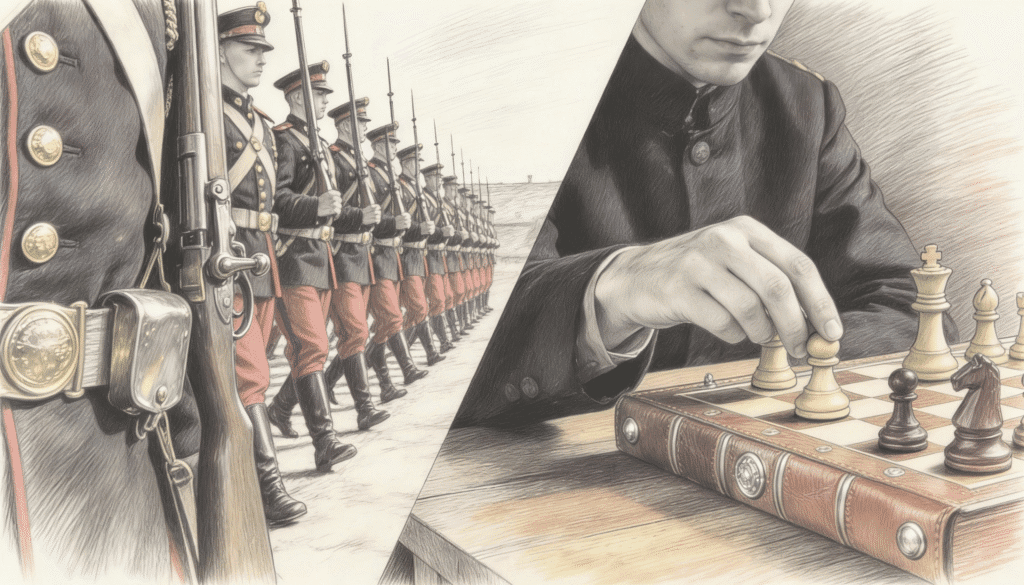
The difference matters. Military discipline works through external pressure and consequences. You wake up at dawn because missing reveille has immediate, unpleasant results. Chess discipline works through internal architecture. You wake up at dawn because you’ve designed your life so that morning study feels less like a choice and more like gravity.
Building the Framework That Chooses For You
Every decision costs energy. Should I study now or later? Should I analyze this game or that one? Should I work on openings or endgames? These micro-decisions drain the same mental resource you need for actual chess improvement. Masters eliminate them.
The framework comes first. You decide once, then the system carries you. Monday is endgame day. Tuesday focuses on your weakest opening. Wednesday reviews losses from the previous week. The schedule exists before motivation does, which means it survives when motivation inevitably disappears.
This works because human brains are terrible at making good decisions when tired or distracted, but excellent at following established patterns. You’re not fighting yourself every morning. You’re just stepping onto the track you already laid.
The Power of Tiny Boundaries
A club player struggled with consistency. Some days he’d study for five hours, then nothing for a week. His rating stagnated. His coach didn’t tell him to study more. He told him to study for exactly twenty minutes every single day, no exceptions.
The player protested. Twenty minutes couldn’t possibly be enough. But he insisted. Twenty minutes, no more, no less. After two weeks, something shifted. The habit became automatic. After a month, he often studied longer than twenty minutes because he was already at the board. After three months, his rating started climbing.
The boundary mattered more than the duration. It created a non-negotiable baseline. On terrible days, when everything went wrong, twenty minutes remained achievable. On great days, it provided momentum. The discipline wasn’t in the hours logged. It was in the promise kept.
Masters understand this instinctively. They don’t rely on feeling motivated. They rely on having clear, small boundaries that must be honored regardless of emotion. The board gets set up at the same time. The analysis happens in the same place. The routine becomes set.
Why Discomfort Is Not The Enemy
There’s a particular kind of player who equates discipline with self-punishment. They force themselves to study positions they hate, grind through openings that bore them, and treat chess improvement like dental work. They usually quit.
Real discipline involves discomfort, but not misery. A master sits with a complicated position until the solution emerges, even when frustration builds. That’s uncomfortable. But it’s also engaging, even fascinating. The discomfort comes from mental effort, not from self-flagellation.
The distinction reveals why military-style discipline often fails chess players. You can force someone to run laps, but you can’t force genuine analysis. The mind simply wanders. Sustainable discipline comes from aligning difficulty with genuine interest. You study difficult positions because understanding them matters to you, not because you’re punishing yourself for yesterday’s losses.
This means knowing yourself. Some players think best in the early morning silence. Others need the afternoon energy. Some require complete isolation. Others benefit from the ambient noise of a café. The framework should enhance your natural state, not fight it.
The Role of Systems Over Goals
Goals are overrated in chess. Everyone wants to reach 2000, break into expert level, or achieve a master rating. These goals provide direction but terrible daily guidance. What do you actually do today to reach 2000? The goal doesn’t answer that question.
Systems do. A system is a repeatable process. Analyze three games per week. Solve fifteen tactics daily. Review your worst opening once per month. These systems don’t promise specific outcomes, but they compound reliably. You can control systems. You can’t control rating points.
This shifts the entire relationship with discipline. You’re not white-knuckling your way toward a distant goal. You’re maintaining a system that produces improvement as a byproduct. The discipline is in honoring the system, not in achieving the goal. Goals can fail despite perfect execution. Systems only fail when abandoned.
Masters live in their systems. They track adherence, not just results. Did I complete my analysis routine? Did I review my mistakes? Did I study the plan? The rating becomes a lagging indicator of systemic consistency, not the measure of daily success.
Environmental Design Beats Willpower
Put the chess board somewhere you’ll see it constantly. Remove the friction between impulse and action. The harder something is to start, the more discipline it requires. Masters reduce starting friction to nearly zero.
One chess player kept a magnetic board next to his coffee maker. Every morning, while waiting for the coffee, he’d play through a position. The proximity created opportunity. The routine created consistency. After years, he’d absorbed thousands of patterns without ever feeling like he was forcing himself to study.
This principle extends everywhere. Put your tactics book on your pillow so you have to move it before sleep. Set your analysis software to open automatically when your computer starts. Schedule study sessions in your calendar like unmovable appointments. The environment does half the work.
The inverse matters too. Remove temptations. If you’re supposed to study but your phone keeps calling, put the phone in another room. If you work better in public spaces, go to a library. If you’re most vulnerable at night, don’t schedule deep work then. Fighting your environment is exhausting. Designing it is efficient.
The Compounding Effect of Small Consistencies
Imagine two players. The first studies intensely for a month, averaging four hours daily. Then life intervenes and they study nothing for three months. The second player studies thirty minutes every single day for four months. Who improves more?
The research on skill acquisition suggests the consistent player wins. Not because thirty minutes daily equals more total time. It often doesn’t. But because distributed practice with consistent reinforcement builds deeper neural patterns than cramming followed by gaps.
Chess memory works through repetition and connection. When you see a pattern repeatedly over weeks, your brain treats it as important and files it in long-term storage. When you binge study then disappear, the brain categorizes it as temporary information and discards most of it. Discipline creates the consistency that enables genuine learning.
This is why masters can seem to play effortlessly. They’re not relying on fresh memory or intense focus. They’ve built such deep pattern recognition through consistent exposure that many moves feel automatic. The discipline of showing up compounds into something that looks like natural talent.
Accountability Without Authority
The military provides external accountability. Miss formation and face consequences. Chess players must build internal accountability, which is harder and more valuable.
Some players find study partners. They commit to analyzing games together weekly. Missing the session means letting someone else down, which creates social pressure. Others join online training groups or work with coaches. The accountability comes from commitment to others, not fear of punishment.
But the deepest accountability is to self. This requires honest record-keeping. Track what you actually do, not what you intended to do. Review the data weekly. Notice patterns. When do you consistently skip study? When do you excel? The data reveals truth that feelings obscure.
Masters develop this internal scoreboard. They know when they’re keeping their commitments and when they’re making excuses. They’re honest about it because lying to yourself only delays progress. This self-knowledge becomes the foundation for sustainable discipline.
The Long Game
Here’s the thing about discipline that nobody mentions early on. It gets easier. Not because the work becomes less demanding, but because the system becomes part of your identity. You’re not someone forcing themselves to study chess. You’re a chess player who studies. The shift is subtle but profound.
This transformation takes time. Months, usually. Sometimes years. The early phase requires conscious effort. You’re building the track. Later, you’re just riding it. The discipline becomes less about forcing behavior and more about maintaining something that already exists.
The masters sitting at their boards at unusual hours aren’t there because of superior willpower. They’re there because they built systems, reduced friction, honored small boundaries, and let consistency compound over time. They designed their environment, tracked their behavior, and stayed honest with themselves.
No drill sergeant required. Just architecture, patience, and the quiet decision to show up again tomorrow.
The alarm will go off at 5:47 AM. The coffee will brew. The board will wait. And the work will continue, one day at a time, until mastery stops feeling like a destination and starts feeling like a practice.