Table of Contents
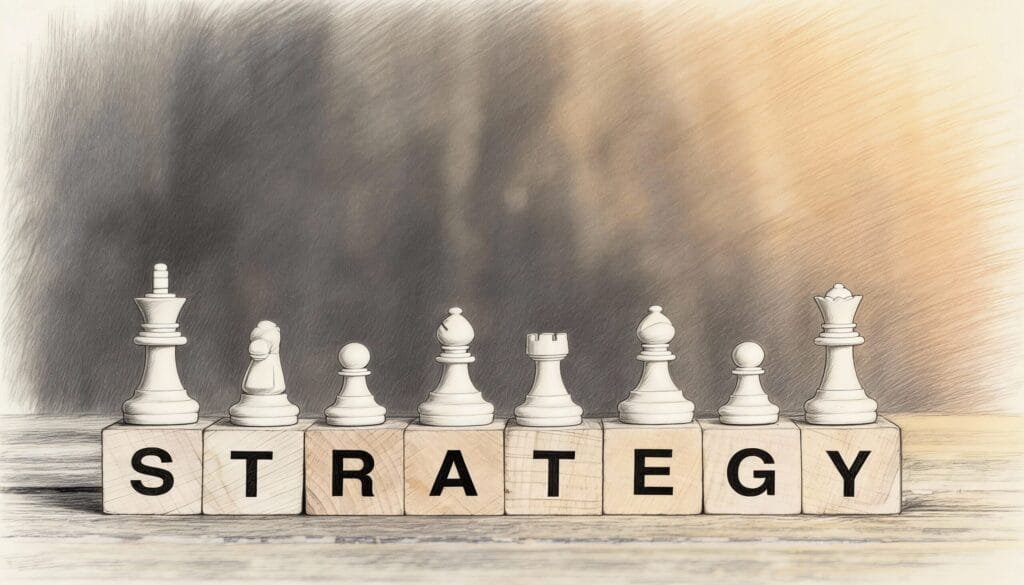
The boardroom and the chessboard share more than just a name. Both demand vision, patience, and the ability to see what others miss. Yet when hiring time comes, most companies reach for the MBA while overlooking the chess player sitting quietly in the corner, three moves ahead of everyone else.
Consider the hiring manager who interviewed two candidates last month. The first arrived with a freshly minted MBA from a top school, armed with case studies about market penetration and growth strategies. The second mentioned a 2100 chess rating almost as an afterthought, buried between marketing experience and Excel skills. The MBA got the job. Three months later, the company faced a crisis that required calm, strategic thinking under pressure. The newly hired MBA panicked and proposed five different solutions in one meeting. Meanwhile, across town, that chess player was quietly turning around a struggling division.
This scene plays out constantly in corporate America. The bias toward formal business education runs deep. But the evidence suggests we might be hiring for the wrong credentials.
The Pattern Recognition Advantage
Chess players spend years training their brains to recognize patterns. Not just on a board with 64 squares, but in systems, behaviors, and outcomes. A decent chess player has seen thousands of positions. A strong player has seen tens of thousands. They learn to spot trouble before it arrives and opportunity before it becomes obvious.
This skill transfers directly to business. Markets move in patterns. Customer behavior follows patterns. Competition cycles through predictable phases. The executive who can recognize these patterns early gains an enormous advantage.
Take an example story of a small tech company facing a pricing decision in 2019. The MBA on the team pulled out the standard playbook: competitive analysis, price elasticity models, focus groups. All valuable tools. But they pointed in different directions, and the team found itself paralyzed by conflicting data. The one chess player in the room stayed quiet through most of the meeting. Finally, he spoke up. He had noticed something everyone else missed. The decision wasn’t really about pricing. It was about positioning. The competition had made a subtle shift in their messaging three months earlier.
Most people hadn’t consciously noticed, but the chess player’s pattern recognition had flagged it. He suggested a positioning change that made the pricing question irrelevant. Revenue jumped.
Business schools teach frameworks. Chess teaches you to see the game within the game.
The Time Horizon Problem
MBA programs typically focus on quarterly results, annual planning cycles, and three to five year strategies. These timeframes make sense in a classroom. They fit neatly into semesters and case studies.
Chess players think differently about time. A single game might last four hours, but the thinking extends far beyond. Strong players develop strategies that unfold over 30 or 40 moves. They make decisions on move 12 that only pay off on move 35. They sacrifice material now for position later. They understand that the optimal move depends entirely on where you want to be ten moves from now.
This long-term thinking remains rare in business. Executives optimize for the next quarter. Managers chase immediate wins. Teams celebrate quick victories without considering whether they advance the larger strategy.
A chess player hired into a struggling retail chain recently made a decision that confused everyone. She recommended investing heavily in employee training at a moment when the company needed to cut costs. The board nearly overruled her. But she had seen this position before, just on a different board. The company’s real problem wasn’t costs. It was customer experience, which stemmed from employee knowledge. The training investment took eight months to show results. When it did, customer satisfaction scores jumped and revenue followed. That chess player had recognized that short-term pain would create long-term advantage. She played move 12 with move 35 in mind.
Comfort With Uncertainty
Business schools teach decision-making frameworks designed to reduce uncertainty. Gather data. Build models. Analyze scenarios. Create forecasts. All useful approaches. But they create a dangerous illusion that uncertainty can be eliminated through enough analysis.
Chess players know better. Every position contains uncertainty. You never have complete information about what your opponent plans. You cannot calculate every possible variation. The board is a universe of unknowns. Strong players learn to make decisions anyway. They develop intuition. They trust pattern recognition. They accept that perfect information never arrives.
The business world increasingly resembles chess more than it resembles a business school case study. Markets shift unpredictably. Technology disrupts without warning. Customer preferences change overnight. The executive who needs perfect data before deciding will always move too late.
Resource Allocation Under Constraints
Perhaps no skill matters more in business than deciding where to deploy limited resources. Every company faces constraints: budget, time, talent, attention. The art of business lies in allocating these scarce resources to maximum effect.
Chess might be the ultimate training ground for this skill. Every piece represents a resource with different capabilities and values. Positions constantly demand trade-offs. Do you develop your pieces or grab space? Do you attack or improve your position? Do you trade pieces or keep the tension? A chess player makes dozens of these resource allocation decisions in every game.
The framework transfers perfectly to business. A product manager decides which features to build first. A CEO decides which markets to enter. A team leader decides who works on what project. All resource allocation under constraints.
Consider the startup that hired a strong chess player as their first product manager. The company had a tiny engineering team and massive market opportunity. Every product decision mattered enormously. The new PM approached the roadmap like a chess position. He identified which features served as forcing moves, which ones improved position, and which ones were actually distractions disguised as opportunities. His roadmap looked nothing like what competitors were building. It looked like what the company needed twelve months from now, not what users were asking for today. The company reached profitability faster than anyone in their space.
The Value of Defeat
Business culture celebrates winning and hides losing. MBA case studies focus on successes. LinkedIn feeds overflow with victories. Resumes list accomplishments. This creates executives who have never truly failed and, more dangerously, never learned from failure.
Chess players lose constantly. Even masters lose. A player rated 2000 loses roughly half their games against similarly rated opponents. Every serious player has experienced the agony of a lost position, the frustration of a blunder, the disappointment of a missed opportunity. They learn to analyze their defeats more carefully than their victories. They understand that losses teach more than wins.
This relationship with failure proves invaluable in business. Markets punish mistakes. Strategies fail. Products flop. Hires disappoint. The executive who has never truly lost, who has never sat with a defeated position and figured out what went wrong, enters these situations without the emotional tools to handle them.
Strategic Thinking Beyond Tactics
Business schools excel at teaching tactics. How to build a financial model. How to segment a market. How to optimize a supply chain. These skills matter. But tactics without strategy lead nowhere.
Chess draws a clear line between tactics and strategy. Tactics are short-term combinations. Strategy is long-term planning. A tactical player might win material. A strategic player builds positions where winning material becomes inevitable. The difference is profound.
Many business leaders are actually tacticians who think they’re strategists. They respond well to immediate problems. They optimize existing processes. They execute plans effectively. But they struggle to see the larger patterns, to understand how today’s decisions shape tomorrow’s options, to build positions of enduring advantage.
The company that recognizes this distinction gains a powerful edge. Chess players bring strategic vision trained through thousands of hours of studying positions, understanding structures, and grasping how small advantages compound into overwhelming superiority.
The Case for the Chessboard
None of this suggests that MBAs lack value. Business education teaches important skills. Financial analysis, marketing frameworks, and organizational theory all matter. The argument is simpler: the cognitive skills developed through serious chess play might matter more.
Pattern recognition, long-term thinking, comfort with uncertainty, resource allocation, learning from defeat, and strategic vision. These capabilities define effective leadership. They also happen to define strong chess players.
The job market has this backwards. Companies should be actively recruiting chess players, not filtering them out. A 2000-rated player has invested thousands of hours in developing their mind. They have trained pattern recognition until it operates at nearly unconscious levels. They have learned to think strategically under pressure. They have failed and learned and improved.
That’s not a hobby buried on page two of a resume. That’s evidence of exactly the cognitive capabilities modern business demands.
The next time a hiring manager reviews candidates, they might pause on that chess rating. Ask about it. Explore what it represents. Consider what those thousands of hours of strategic thinking might bring to the organization.
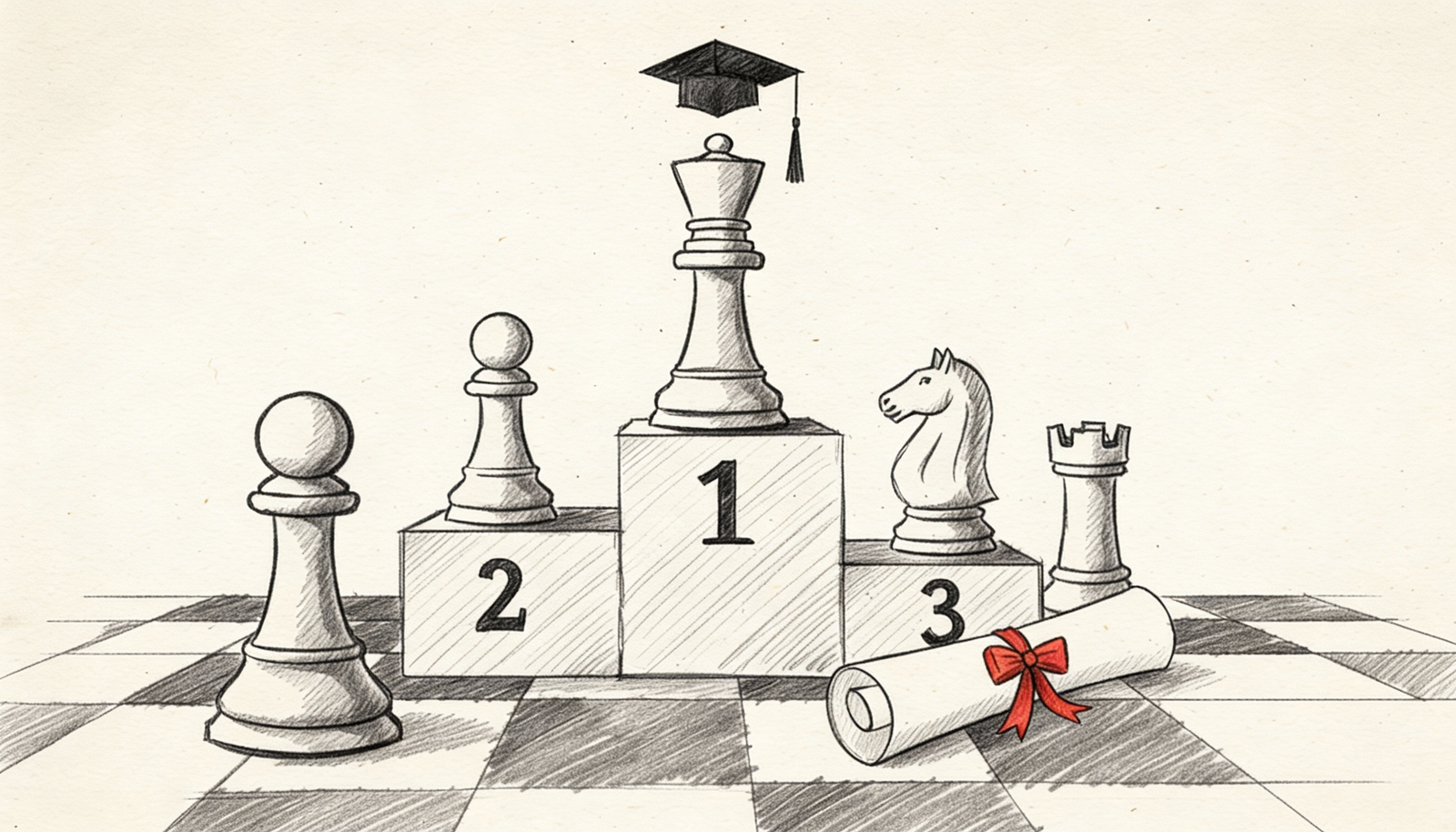
The MBA will always have advocates. Perhaps it’s time the chess player found a few as well. The board, whether in a conference room or topped with 32 pieces, rewards the same skills. Companies just need to recognize them.