Table of Contents
The conference room fell silent. Across the table, the CEO of a Fortune 500 company leaned back in his chair, arms crossed. He had just made what seemed like a generous offer. Too generous, actually. The young entrepreneur sitting opposite him knew something was wrong. He had seen this pattern before, just not in a boardroom. He had seen it on a chessboard.
What happened next would either make or break his startup. But instead of rushing to accept what looked like a winning deal, he paused. He thought about position, not pieces. He considered the endgame, not just the next move. And he recognized the oldest trick in the book: a sacrifice that wasn’t really a sacrifice at all.
This moment captures something essential about both chess and negotiation. They are not games of chance. They are games of pattern recognition, strategic patience, and psychological warfare conducted under the guise of civility.
The Board Before You
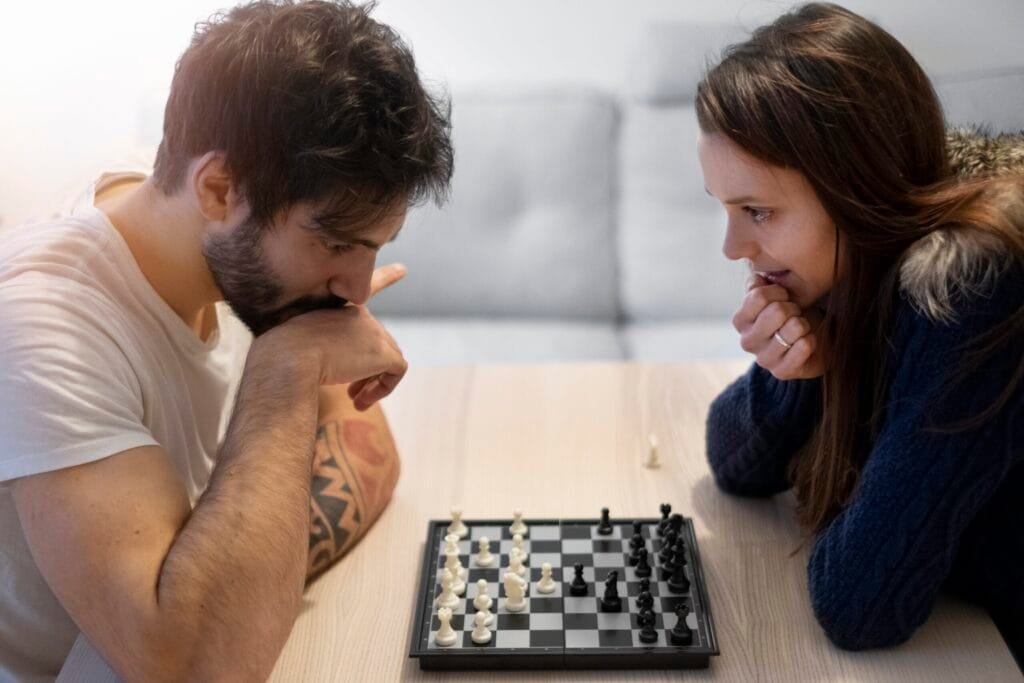
Every negotiation, like every chess game, begins with an invisible board. The pieces are already in position before anyone speaks. Your reputation sits in one square. Their desperation occupies another. Market conditions hover like a queen in the center. Time pressure lurks in the corner, waiting to pounce.
The amateur looks at the table and sees two people talking about money or terms or conditions. The strategist sees something entirely different. They see a dynamic system where every element affects every other element. Change one variable and the entire position shifts.
Consider what happened when Disney negotiated to acquire Pixar in 2006. Steve Jobs didn’t just walk in and talk about price. He understood that Disney needed Pixar more than Pixar needed Disney. The position was already in his favor before the first meeting. The actual negotiation was just the act of converting that positional advantage into material gain. He became Disney’s largest individual shareholder and secured creative control for Pixar’s team. The board was set long before anyone sat down to talk.
This concept of “the position” is fundamental to chess thinking. Grandmasters spend less time calculating specific variations than amateurs might expect. Instead, they evaluate positions. They ask: Who controls more space? Whose pieces are better coordinated? Where are the weaknesses?
The same questions apply in any business negotiation. Who has more options? Whose position improves with time? Where are the vulnerabilities that neither side wants to acknowledge?
The Tempo of Power
In chess, tempo refers to time measured in moves rather than minutes. Gaining a tempo means making your opponent respond to your threats instead of pursuing their own plans. Losing a tempo means wasting a move while your opponent improves their position.
Business negotiations have tempo too, but people often miss it because they confuse activity with progress. Sending another email is not the same as forcing a response. Scheduling another meeting is not the same as advancing your position.
A software company once spent three months negotiating with a potential client. The client kept asking for modifications, adjustments, and special considerations. Each request seemed reasonable in isolation. But taken together, they revealed a pattern. The client was dictating tempo. Every meeting began with their concerns, their needs, their timeline. The software company was always responding, never initiating.
The breakthrough came when the negotiating team recognized this pattern and deliberately broke it. They stopped answering every request with immediate accommodation. They started asking their own questions. They introduced new terms. They shifted from defense to offense, and suddenly the client’s demands became less aggressive. Why? Because tempo had changed.
The chess principle here is simple but profound. The player who controls tempo controls the flow of the game. This doesn’t mean being aggressive for its sake. Sometimes the best way to control tempo is to slow things down. Sometimes it means forcing rapid exchanges. The key is making a conscious choice rather than drifting into a reactive posture.
Space and Options
Chess players talk obsessively about space. More space means more options for your pieces. Less space means cramped positions and limited choices. This principle translates directly to negotiation dynamics.
When a job candidate has multiple offers, they control more space. When a buyer has several vendors competing for their business, they occupy more of the board. Space equals options, and options equal power.
But here’s where it gets interesting. Sometimes you don’t actually need more options. You just need the other side to believe you have them.
A manufacturing firm was negotiating a supply contract renewal. Their current supplier knew they were the only company that could meet the manufacturer’s technical specifications. The supplier proposed a price increase. Significant one.
The manufacturer spent two months not negotiating. Instead, they invested in adapting their product to work with components from other suppliers. They didn’t complete this work. They didn’t need to. They just needed to demonstrate credibly that they were expanding their options. When negotiations resumed, the price increase disappeared.
This is the chess concept of “luft,” which literally means air or breathing room. You create space not always by expanding into it, but by ensuring you have somewhere to move when pressure comes. The manufacturer didn’t change suppliers. They changed the perception of available space, and that changed everything.
Development Before Attack
Beginning chess players often rush to attack before their pieces are properly coordinated. They see an opportunity to threaten the opponent’s king. Then they wonder why their attack fizzles out or, worse, why they suddenly find themselves defending against a counterattack they never saw coming.
Strong players develop their position first. They bring their pieces into play. They establish coordination. They create a position where multiple pieces support each other before launching any serious threats.
Business negotiations follow the same pattern. The person who rushes to propose terms before understanding the full situation often loses. They make offers that reveal their priorities too early. They commit to positions they later regret. They attack before their own position is secure.
Prophylaxis and Prevention
Strong chess players spend enormous energy on moves that don’t seem to accomplish anything obvious. They’re not attacking. They’re not capturing pieces. They’re not advancing pawns. They’re preventing. They’re stopping the opponent’s ideas before those ideas become dangerous.
This concept, called prophylaxis, separates advanced players from beginners. Beginners focus on their own plans. Advanced players focus on the conflict between plans. They see what the opponent wants to do and they stop it.
In business negotiations, prophylaxis means anticipating objections and addressing them before they’re raised. It means structuring deals so the other side can’t exploit predictable vulnerabilities. It means playing defense proactively rather than reactively.
The key to effective prophylaxis is imagination. You must envision how the deal could go wrong, not just how it could go right. You must see the ways the other party might try to renegotiate, escape, or exploit terms later. Then you build preventive measures into the structure itself.
This isn’t paranoia. It’s prudent pattern recognition. Deals fall apart for predictable reasons. People’s interests change. Market conditions shift. Better opportunities appear. Prophylaxis means anticipating these changes and preparing for them in advance.
The Exchange of Values
Chess players constantly evaluate trades. Should I exchange my bishop for their knight? The answer depends on the position. Sometimes bishops are better. Sometimes knights are. There’s no universal answer, only contextual ones.
Negotiations involve similar exchanges, but the values are less obvious. A supplier might exchange flexible payment terms for a longer contract. An employee might trade salary for equity. A company might accept lower margins for market share.
The sophisticated negotiator recognizes that different parties value different things differently. This creates opportunities for trades that benefit both sides. The key is understanding what the other party values, which often differs from what you assume they value.
This principle of unequal values is fundamental to creating good deals. If both parties valued everything identically, every negotiation would be zero sum. One side’s gain would require the other side’s loss. But in reality, parties weight priorities differently. The art is discovering these differences and structuring exchanges that exploit them.
Calculation and Intuition
Chess requires both calculation and intuition. Beginners rely purely on calculation, trying to analyze every possible sequence. Experts blend calculation with pattern recognition. They feel which positions are promising before they calculate specific variations.
In negotiations, pure analysis leads to paralysis. You can research forever. You can model scenarios endlessly. At some point, you must trust your read of the situation and act.
The best negotiators develop this intuition through experience. They’ve seen enough patterns to recognize when something feels off, even when the logic looks sound. They notice when the other party’s enthusiasm seems forced. They sense when resistance is genuine versus performative. They feel when a deal is really done versus when more negotiation remains beneath polite agreement.
This doesn’t mean ignoring analysis. It means supplementing it. Run the numbers. Understand the terms. Research the context. Then pay attention to what your instincts tell you about the situation. That young entrepreneur in the opening story didn’t calculate his way to recognizing the trap. He felt it. Then he analyzed why.
When to Offer a Draw
Chess players can agree to a draw, ending the game without a winner. Beginning players rarely offer draws. They want to win. Intermediate players offer draws too readily, afraid of losing. Strong players offer draws strategically, when the position truly offers neither side advantage.
In business, knowing when to walk away or settle for an adequate rather than optimal outcome is a critical skill. Some negotiations aren’t worth winning. The cost exceeds the benefit. The relationship damage outweighs the gain. The time investment produces diminishing returns.
A consultant spent four months negotiating with a potential client. The project scope kept shrinking while demands kept growing. Finally, they recognized the pattern. This client would be difficult throughout the engagement. The consultant offered to part ways amicably. No winner. No loser. Just a mutual recognition that fit wasn’t there.
This required seeing past ego and sunk cost. Four months felt like too much time to abandon. But continuing meant committing years to a problematic relationship. The draw was the right result.
The strategic question isn’t whether you can win a negotiation. It’s whether winning is worth what it costs.
The Board Awaits
That young entrepreneur in the conference room made his decision. He didn’t accept the too generous offer. He asked questions instead. He probed the terms. He discovered the catch. The large upfront payment came with restrictive covenants that would essentially hand control of his company to the Fortune 500 firm.
By pausing, by thinking strategically rather than tactically, by recognizing patterns from chess translated to business, he avoided a trap disguised as an opportunity. Eventually, he negotiated terms that gave him funding without surrendering control. The final deal was smaller but better.
Chess doesn’t teach you what to do in business negotiations. The situations are too different. But chess teaches you how to think about strategic situations. It trains pattern recognition. It develops the habit of considering second and third order consequences. It builds comfort with complexity and uncertainty.
Every negotiation is a unique board. The pieces change. The stakes vary. The personalities differ. But the underlying principles of strategic thinking remain constant. Position matters more than pieces. Development precedes attack. Space creates options. Prevention beats cure.
The next time you enter a negotiation, imagine a board. Not a literal one, but a mental model of the strategic landscape. Where do you have space? Where does time pressure exist? What are you developing? What are you preventing? Where is your opponent strong and where are they weak?
You don’t need to be a chess master to think like one. You just need to see past the surface of what’s being said to the deeper structure of what’s happening. The board is always there. Most people just don’t see it.
Those who do see it, who recognize the patterns, who think several moves ahead while staying focused on the current position, they’re the ones who consistently negotiate better outcomes. Not through aggression or manipulation, but through strategic clarity.
The conference room is a chessboard. The question is whether you’re playing the game or just moving pieces randomly and hoping for the best.
Choose wisely. Your competition certainly is.