Table of Contents
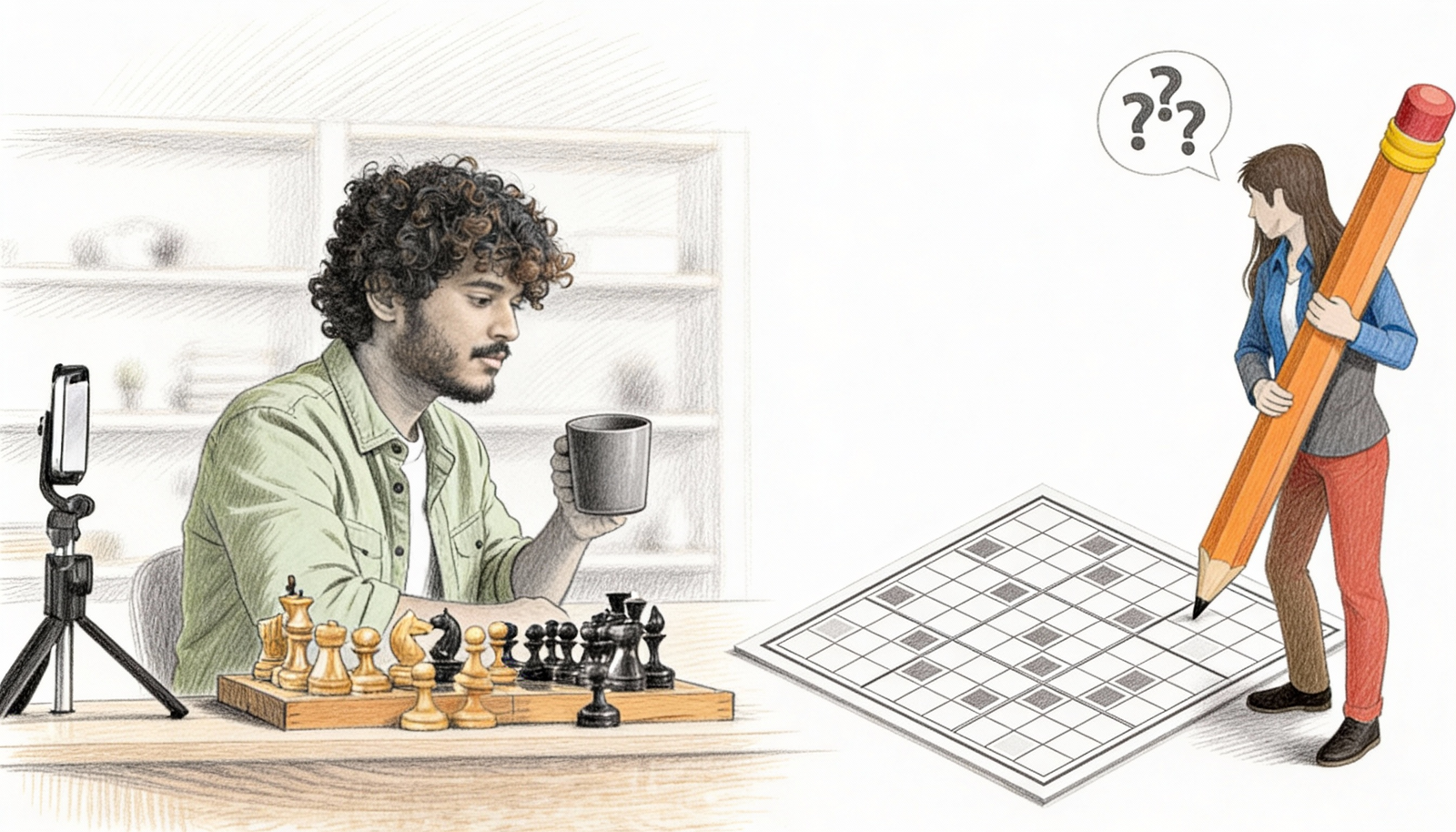
The coffee shop regular had a system. Every morning, same table, same order, same Sudoku book. Medium puzzles on Mondays, hard on Wednesdays, expert on Fridays. Pencil marks filled the margins. Numbers slotted into place. Twenty minutes later, satisfaction arrived with the final digit. Brain officially exercised. Day officially started.
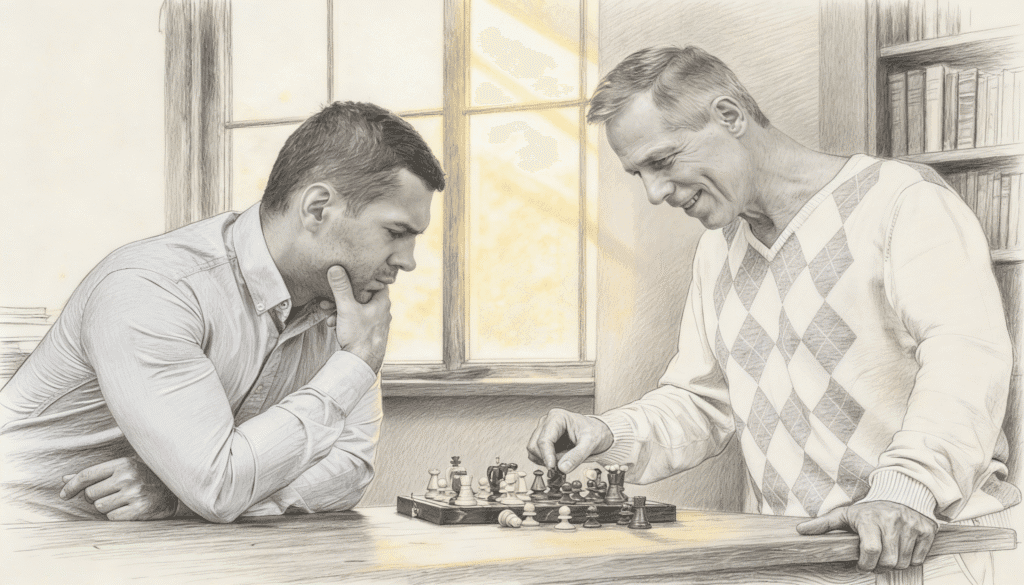
Across the room, two software developers hunched over a chess app between meetings. One sacrificed a bishop. The other’s eyes widened, fingers hovering over the screen. Was this a blunder or a trap? The answer would determine whether lunch break ended in victory or a hasty resignation before the next standup meeting.
One ritual trains the brain. The other transforms it.
The Comfortable Trap of Perfect Solutions
Sudoku sells an appealing fantasy. Sharpen your logic, boost your brainpower, all while sipping morning coffee. The mechanics feel scientific. Numbers follow rules. Patterns emerge from chaos. Every puzzle guarantees exactly one correct solution hidden in the grid, waiting to be discovered through pure reasoning.
This guarantee is the problem.
Adult life doesn’t operate on Sudoku rules. The project scope that expands three days before deadline doesn’t have a single correct solution. The aging parent who needs care but refuses help isn’t a logic puzzle with hidden numbers. The career plateau at thirty five doesn’t come with a technique guide in the back of the book.
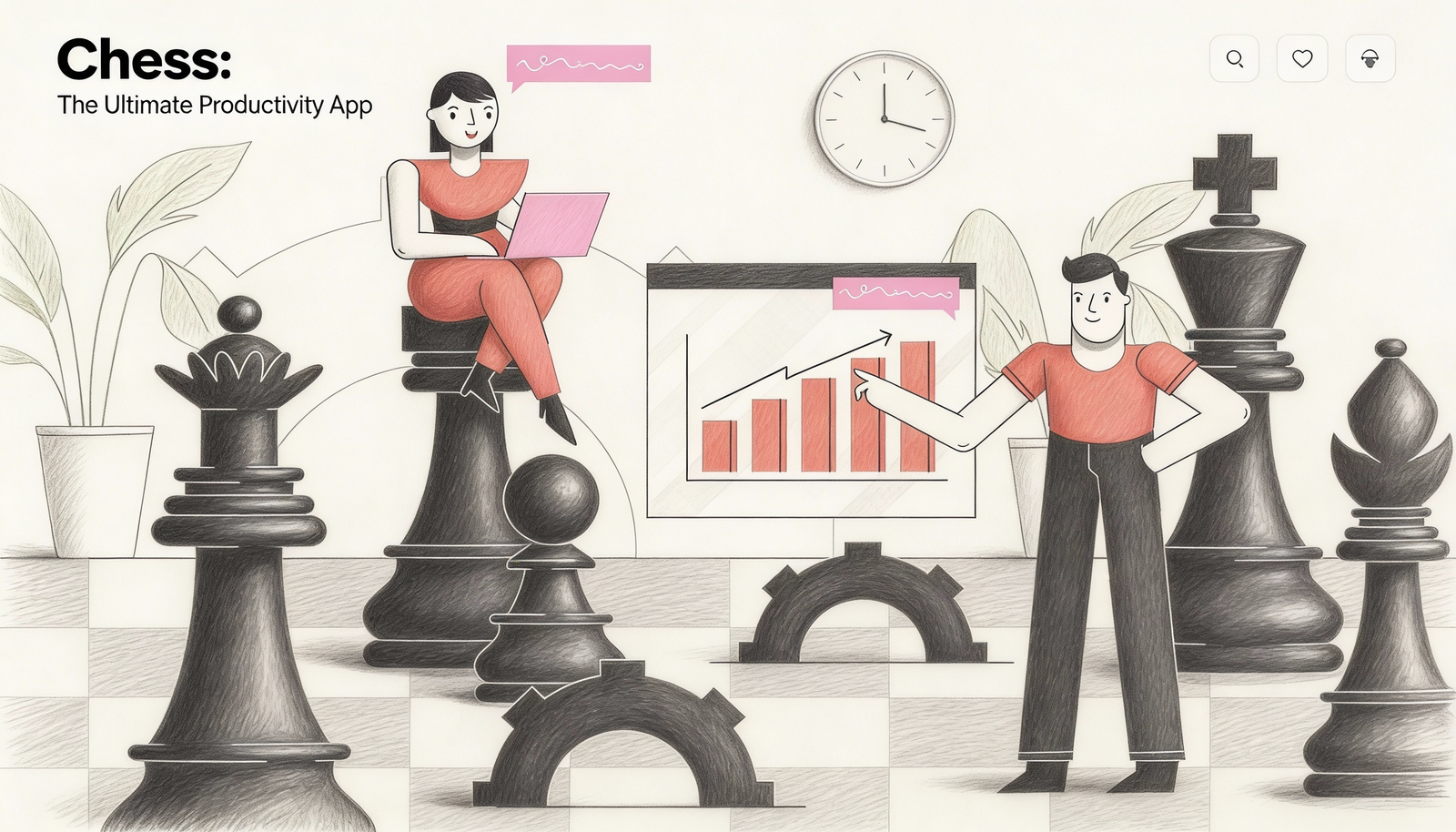
Chess mirrors reality more honestly. Every game starts identically, but by move six the position has diverged into territory no human has ever seen before. Mathematicians estimate more possible chess games exist than atoms in the universe. No two games repeat. No answer key exists. The opponent across the board isn’t revealing a pre-determined solution. They’re actively constructing problems designed specifically to break your plans.
When Your Strategy Meets Someone Else’s
A chess player develops a plan. Control the center. Develop pieces harmoniously. Castle the king to safety. Standard opening principles, taught to beginners everywhere. The position looks promising.
Then the opponent does something unexpected. They ignore conventional wisdom. They sacrifice material for unclear compensation. They create threats from an angle that wasn’t visible thirty seconds ago. Suddenly the textbook plan looks naive, even foolish.
The player must shift gears immediately. That central pawn that looked so strong now blocks your own pieces. The piece development that seemed logical now leaves weaknesses. What appeared to be winning is actually losing. The brain doesn’t just calculate. It must recognize its own errors, discard failed assumptions, and rebuild strategy from scratch while the clock ticks.
Research shows activation not just in logic centers but in areas associated with pattern recognition, long term memory, and spatial processing. The brain hadn’t just gotten better at one task. It had fundamentally reorganized its neural architecture around the demands of strategic competition.
Sudoku strengthens specific neural pathways. Chess rewires the entire system.
The Cost of Decisions
Make an error in Sudoku and the mistake announces itself quickly. A duplicate number appears. The logic breaks down. Erase, restart, solve. The grid forgives immediately. Stakes remain safely abstract.
Chess punishes with compound interest. The casual pawn push in move twelve creates a structural weakness invisible until move twenty eight. By then, the position has collapsed. The opponent saw the consequences. You didn’t. This delayed feedback loop forces the brain to think in timelines, not just tactics.
Consider the professional who accepts a job offer for slightly higher pay. Reasonable. Logical. Financially sound. But that decision closed off a career path that wouldn’t have become available for two years. The company culture that seemed fine during interviews creates daily stress six months in. The commute that felt manageable burns three hours daily from family time. One decision, rippling forward through time.
Chess trains this type of thinking. The player who pushes pawns aggressively to gain space learns that those pawns can’t move backward. They’ve created permanent commitments. Weaknesses emerge around them. The position demands careful management for the rest of the game. Every decision echoes forward.
These mental habits transfer directly. The manager who learns to evaluate long term positional factors starts seeing how team structure decisions create consequences months later. The parent who understands strategic patience applies it to difficult conversations with teenagers. The entrepreneur who thinks about weak squares in a position starts identifying weak points in business models.
Orchestrating Multiple Intelligence Types
Sudoku activates one cognitive system. Logical reasoning runs the show, calculating which numbers fit which squares. The same mental process every puzzle, just applied to different grids.
Chess demands cognitive integration. Logic calculates material trades and counts attacked squares. Pattern recognition identifies formations from thousands of games stored in memory. Intuition suggests candidate moves before conscious reasoning can justify them. Creativity finds unconventional solutions when standard plans fail. Strategic thinking maintains long term direction while tactical calculations handle immediate threats.
A player faces a position where the obvious attacking move looks irresistible. Material can be won. The opponent’s position looks compromised. Every logical calculation says push forward. But something deeper, something intuitive, whispers caution. The pattern resembles a trap from a game three months ago. That whisper saves the player from a tactical nightmare that pure logic couldn’t predict.
This integration proves essential in professional life. The job interview isn’t a pure logic test. It requires reading social dynamics, adapting to curveball questions, and presenting competence without arrogance. The salary negotiation needs both numerical analysis and psychological insight. The difficult team conversation demands analytical clarity and emotional intelligence simultaneously. Chess builds the neural infrastructure to handle these multi-dimensional challenges.
Reading Minds Across the Board
Sudoku happens in isolation. The grid has no psychology. It doesn’t bluff, hope, fear, or celebrate. It exists as pure logic, untouched by human complexity.
Chess is psychological warfare disguised as a board game. Every move communicates intention. The opponent speaks through piece placement, revealing personality and strategy. The player who pushes pawns aggressively in every game broadcasts impatience. The opponent who builds elaborate defensive structures before attacking shows caution, perhaps excessive. The creative player who sacrifices material for unclear advantages demonstrates either brilliance or recklessness. Reading these signals requires the same neural machinery that interprets body language in business meetings.
The sales professional uses this skill constantly. What does the client really value? Where are they willing to compromise? What objections are genuine versus negotiating tactics? The chess player has practiced this mental modeling thousands of times, reading intentions from piece movements instead of verbal communication.
The manager leading a team applies the same cognitive framework. Which team member needs encouragement versus accountability? Who’s struggling silently versus asking for help? What’s the real source of conflict between departments? These questions require modeling other minds, exactly what chess trains.
Emotions Under Pressure
Sudoku maintains emotional neutrality. Puzzles don’t trigger anxiety or euphoria. They sit on the page, logical and calm, waiting for solutions.
Chess activates the full emotional spectrum. Win a game and genuine satisfaction follows. Lose and real frustration or disappointment arrives. Blunder a piece and the stomach drops. Face a powerful attack and stress spikes. These emotions aren’t design flaws. They’re the training mechanism.
The most valuable professional skill might be maintaining clear thinking under emotional pressure. The presentation to executives where the budget depends on performance. The performance review where career advancement hangs in the balance. The medical diagnosis that requires processing devastating news while making treatment decisions. The difficult conversation with a spouse about finances or parenting. All demand thinking clearly while emotions run hot.
Chess forces this skill development. The player who spirals after one mistake into more mistakes never improves. The player who gets overconfident after winning material and plays carelessly learns nothing. But the player who notices the emotion, acknowledges its presence, then continues calculating accurately has learned something priceless.
The board becomes a laboratory for emotional regulation. Make a blunder, feel the frustration surge, but keep analyzing the position. Face near-certain defeat, acknowledge the disappointment, but search for defensive resources. The emotions don’t disappear. They just stop dictating decisions.
The Expanding Challenge
Solve enough Sudoku puzzles and the ceiling appears. The expert grids feel like harder versions of the medium grids. The techniques become familiar. Progress plateaus. The brain has extracted the available learning.
Chess has no ceiling. Grandmasters study for decades and still find new ideas. Games from the 1800s yield fresh insights when analyzed with modern understanding. Computer analysis reveals layers of complexity invisible to human perception. The game grows deeper with study, not shallower.
This matters enormously for adult cognitive health. Neuroscientist Dr. Lawrence Katz researched what he termed “neurobics,” exercises that create new neural pathways. The critical element isn’t difficulty alone. It’s novelty. The brain needs genuinely new challenges, not incrementally harder versions of familiar problems.
Chess delivers perpetual novelty. Opening theory expands annually. Strategies evolve. Computer analysis overturns century-old evaluations. Even the same opponent plays differently from one week to the next. The brain never settles into pure mechanical pattern execution. It adapts constantly to unprecedented situations.
The forty-year-old who learns chess discovers a pursuit that will remain intellectually challenging at seventy. The same cannot be said for Sudoku.
The Vanishing Art of Deep Focus
Modern work culture rewards speed. Quick responses win. Rapid decisions dominate. Efficiency metrics rule everything. The professional who thinks for twenty uninterrupted minutes on a single problem looks unproductive.
Chess rewards something countercultural. The player who calculates quickly but superficially loses to the player who thinks slowly but thoroughly. The game teaches that certain problems require sustained, undivided attention. Not everything yields to rapid-fire analysis.
A player faces a complex middlegame position. The first candidate move looks reasonable. The second looks better. Deeper analysis reveals a flaw in the second move. Fifteen minutes pass, calculating variations, checking for tactics, evaluating resulting positions. Finally, after genuine mental effort, the move gets made. This cognitive endurance, the capacity to maintain focus on a single complex problem, becomes increasingly rare and valuable.
Sudoku doesn’t build this muscle. The grids solve in minutes. Satisfaction comes quickly. The brain never learns to sit with genuine complexity for extended periods, tolerating the discomfort of uncertainty while working toward clarity.
The Professional Edge
Two product managers face the same challenge. A competitor launched a feature that threatens market share. The response requires quick action.
The first manager, trained on Sudoku thinking, looks for the logical solution. Copy the feature. Match the competition. Fill in the obvious square. It makes sense, it’s defensible, it’s safe.
The second manager, trained on chess thinking, considers multiple dimensions. What does the competitor’s move reveal about their strategy? What resources are they committing? What vulnerabilities does this create? Instead of matching the feature, he identifies the weakness in the competitor’s position and develops a counter-strategy that makes their feature irrelevant.
The difference isn’t intelligence. It’s cognitive framework.
The Verdict
Sudoku isn’t worthless. Any mental activity beats passive screen time. The puzzles provide pleasant cognitive engagement during commutes or lunch breaks. They deserve credit for that.
But for adults seeking genuine cognitive development, chess offers something qualitatively different. It builds strategic thinking applicable to career decisions. It develops pattern recognition that transfers to market analysis. It trains emotional regulation under pressure, essential for leadership. It forces modeling of adversarial thinking, crucial for negotiation. It demands sustained focus, increasingly valuable in distraction-saturated work environments.
Chess won’t transform anyone into a genius. No game can do that. But it builds mental capabilities that compound over time into genuine professional and personal advantages. It’s messier than Sudoku, more frustrating, more emotionally demanding, and more human.
Perhaps that’s exactly why it works. The best training simulates the real challenge. Adult life involves incomplete information, intelligent opposition, emotional stakes, competing priorities, and no single correct answer. Chess understands this reality. Sudoku doesn’t.
The morning ritual deserves an upgrade. Close the puzzle book. Open the chess app. Push a pawn forward. See what happens when someone pushes back.
Your brain will thank you. Your career might too.