Table of Contents
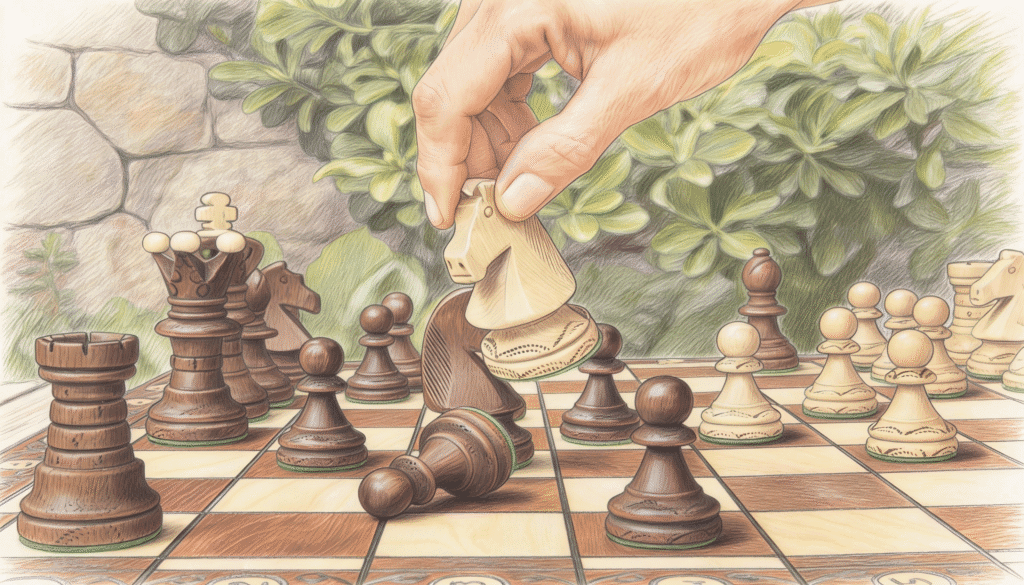
The knight stands in the middle of the board, surrounded. Three enemy pieces aim at it like arrows drawn back in their bows. The knight is doomed. Everyone can see it. The player controlling the knight can see it. But here’s where chess gets interesting. That knight has about five seconds left to live, and it plans to make those five seconds count.
This is desperado logic. The art of causing chaos when defeat is certain.
The Last Stand
Picture a scene from any action movie. The hero is cornered, outgunned, wounded. The villain smirks, thinking victory is assured. Then the hero does something unexpected. Not an escape. Not a surrender. Something that changes everything, even in defeat.
Chess has moments exactly like this. A piece becomes trapped or attacked with no escape route available. Most beginners panic and move the piece somewhere useless. Strong players think differently. They ask one crucial question: what damage can this piece do before it dies?
The answer transforms losing positions into dynamic complications.
What Makes a Desperado Move
The term desperado comes from the Spanish word for desperate. In chess, it describes a piece that knows its time is up. But instead of meekly accepting capture, this piece lashes out. It takes something with it. Or it gives a spite check. Or it forces the opponent to deal with a new problem before collecting their prize.
The logic is simple yet profound. When a piece is already lost, its value drops to zero. This creates a strange freedom. The piece has nothing left to lose. Every action becomes pure gain, even if that action seems reckless under normal circumstances.
Think of it as the chess equivalent of flipping the table. Not out of anger, but as calculated strategy.
The Psychology Behind the Tactic
Human brains are wired to hate losing material. Players spend entire games trying to maintain material balance or gain advantages. When they finally trap an enemy piece, a tiny celebration happens in their mind. They’ve won something. The hard part is over.
This is exactly when desperado moves strike hardest.
The opponent expects simple capture. Instead, they face a new crisis. Their queen might be under attack. Their king might be in check. A pawn might advance to promotion with check attached. The psychological impact multiplies the tactical impact.
Suddenly, the player who thought they were winning material finds themselves solving unexpected problems. The tempo shifts. Calculations go out the window. The game that seemed under control becomes messy.
This mental disruption matters as much as the material itself. Chess is played in minds as much as on boards.
When Zero Equals Something
Standard chess logic says losing a piece without compensation is terrible. A player down a knight or bishop faces an uphill battle. But desperado logic flips this script.
When a piece is already trapped, already destined for capture, its material value becomes theoretical. The opponent will get it next move anyway. So that piece exists in a strange quantum state. Already lost but not yet captured. Already worthless but still capable of action.
Smart players exploit this window. They ask what the piece can accomplish in its final moment. Can it capture something valuable? Can it create threats that cost the opponent time? Can it force concessions that change the game’s character?
Sometimes a doomed knight can snatch a rook. Sometimes a trapped bishop can grab a crucial pawn. The material stays imbalanced, but less so. The opponent still wins the exchange, but their victory feels hollow.
Other times, the desperado doesn’t take material at all. It gives check. This simple move forces the opponent to address the king’s safety before collecting their prize. One tempo of delay might allow defensive resources to emerge elsewhere on the board.
The Spite Factor
Chess players talk about spite checks and spite captures. The words sound petty, but the concept is pure calculation. When a player sees their piece is doomed, they look for the most annoying legal move available.
Annoyance in chess has concrete value. Every move the opponent spends dealing with complications is a move not spent improving their position. Every surprise they face drains mental energy. Every forced response limits their options.
Consider a trapped rook with the enemy queen bearing down. The rook can’t escape. But the rook can check the enemy king, forcing it to move. Then the queen captures the rook as planned. The material result is identical. But the king now stands on a different square, possibly a worse square. That small difference might matter ten moves later.
This is spite with purpose. Petty revenge that accidentally wins games.
Recognizing the Moment
The hardest part of desperado tactics is recognition. Players must identify when their piece is genuinely lost. Too early, and they give up pieces that could have been saved. Too late, and the opponent captures without facing complications.
The key is counting. How many pieces attack this square? How many pieces defend it? If the attackers outnumber the defenders and no escape exists, the piece is doomed. This is when desperado thinking should begin.
But counting alone isn’t enough. Players must also evaluate whether the desperado move actually accomplishes something. A knight that dies while accomplishing nothing hasn’t used desperado logic. It has just died badly.
The best desperado moves create genuine problems. They force the opponent to choose between collecting material and addressing threats. Or they equalize material in unexpected ways. Or they disrupt the opponent’s coordination enough that the material advantage becomes hard to convert.
The Opponent’s Dilemma
Every desperado move presents the opponent with a choice. Take the free piece now or deal with the new threat first?
Sometimes the answer is obvious. If the desperado gives check, the opponent must respond to check. The laws of chess don’t give them options. But other times, the choice is genuinely difficult.
Maybe the desperado threatens checkmate. The opponent must prevent mate even if it means letting other pieces escape or make their own threats. The player who set the trap gains time and initiative despite losing material.
Maybe the desperado threatens to win back equivalent material. A doomed bishop captures a knight. Now the opponent must recapture, and suddenly both players have lost a piece. The material imbalance the opponent worked to create has vanished.
This is the beautiful cruelty of desperado logic. It transforms inevitable losses into complicated choices. And complicated choices lead to mistakes.
Practical Applications
Desperado moves appear most often in tactical melees. Both sides attack. Pieces fly everywhere. Material exchanges happen in cascades. This is when pieces frequently become trapped with one move of life remaining.
Expert players develop a sixth sense for these moments. They see their piece is doomed and immediately scan for desperado possibilities. What can I take? What can I threaten? How can I make my opponent’s life harder?
This thinking extends beyond single pieces. Sometimes an entire plan is doomed. The opponent has found a defense that crushes the attack. Instead of retreating slowly, strong players look for desperado versions of their failed plan. They commit to the attack even when success is impossible, hoping to create chaos that offers unexpected chances.
The same logic applies to endgames. A player with a lost position might sacrifice everything to reach a drawn position. If the game is lost anyway, nothing is really being sacrificed. It’s all desperado thinking.
When Not to Play Desperado
Like any tactic, desperado moves have limits. Not every doomed piece should go down swinging.
Sometimes quiet acceptance is stronger. If the desperado move accomplishes nothing meaningful, taking time to make it wastes mental energy. Better to let the opponent capture and focus on the position that remains.
Sometimes the desperado move makes things worse. A piece that’s attacked might not be truly trapped. Moving it aggressively might walk into an even bigger trap. Players must verify their piece is actually lost before committing to desperado tactics.
And sometimes the desperado move helps the opponent. Taking a pawn with check sounds good until that pawn was blocking an important file. Now the opponent’s rook activates with tempo. The desperado backfired.
Calculation matters. Desperado isn’t a replacement for accurate chess thinking. It’s a tool that enhances it.
Desperado logic teaches something beyond chess tactics. It’s about finding value in seemingly hopeless situations. About maintaining agency even when outcomes appear predetermined. About making opponents pay a price for their victories.
Life rarely offers clean wins or losses. Most situations exist in grey areas where damage control matters as much as success. The player who accepts defeat passively suffers maximum harm. The player who fights intelligently even in defeat minimizes damage and sometimes discovers unexpected paths forward.
The Ripple Effect
Strong players know that desperado moves create ripples. The immediate tactical result might favor the opponent. They still win material. But the position after the desperado differs from what they calculated.
That different position might offer defensive resources. A pawn closer to promotion. A piece on a better square. An open file that wasn’t open before. Small differences accumulate.
Sometimes these ripples extend into the endgame. A desperado capture in the middlegame might remove the exact pawn the opponent needed to win a rook ending forty moves later. Chess positions are interconnected webs where every change matters.
This is why strong players always execute desperado moves when they offer genuine value. The immediate gain might be small. But small gains compound over time, especially in long games where material advantages must be converted through precise technique.
Training the Instinct
Developing desperado awareness requires practice. Players must build the habit of checking for tactical shots whenever their pieces face capture.
Puzzle solving helps. Tactical problems often feature desperado themes. The solution might involve a piece that’s about to die taking something valuable first. Repetition builds pattern recognition.
Game analysis helps even more. After finishing a game, players should review moments where they lost material. Could a desperado move have reduced the damage? What was overlooked in the heat of battle?
Playing faster time controls builds desperado instincts too. In blitz and rapid games, players don’t have time for deep calculation. They rely on pattern recognition and tactical alertness. Desperado moves become automatic responses to seeing trapped pieces.
At high levels, desperado awareness becomes expected. Missing them is considered a significant oversight.
This creates an interesting dynamic. Both players know about desperado logic. Both watch for it. The tactic becomes part of the calculation before pieces even become trapped. Players avoid setups where opponents might have desperado options. This raises the overall quality of play. Games become more precise because players must account for last gasp tactics. The chess becomes richer.
The Final Word
Desperado logic represents chess at its most human. It’s about refusing to go quietly. About extracting value from disaster. About making opponents earn every advantage.
The doomed piece becomes a teacher. It shows that material value isn’t absolute. That timing matters. That even in defeat, choices remain.
Next time a piece becomes trapped with no escape, remember the desperado. Look for the spite check, the spite capture, the move that makes the opponent’s victory just a little bit harder. Sometimes that small edge makes all the difference.
Because in chess, as in life, how you handle defeat shapes the entire game.