Table of Contents
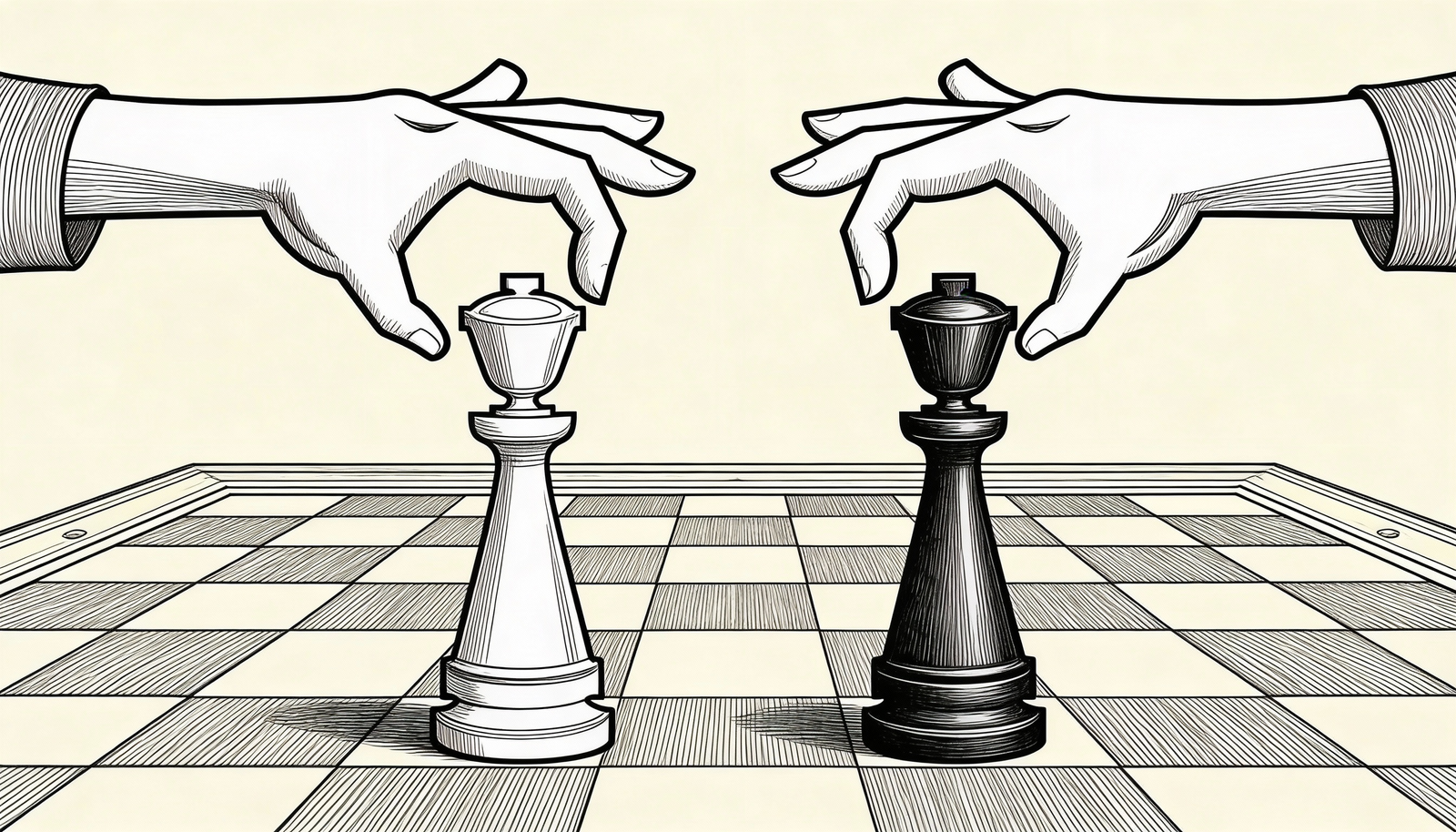
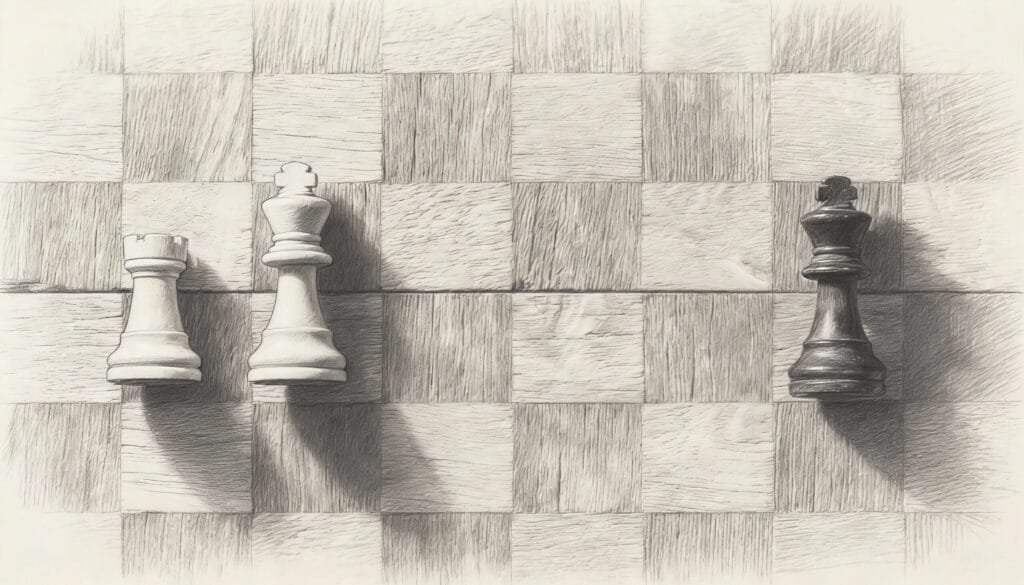
The endgame is where chess reveals its true nature. The board empties out, the noise fades, and suddenly two pieces that spent most of the game in supporting roles must learn to dance together. The rook and king, once separated by necessity and safety concerns, now find themselves thrust into an intimate partnership. Their success depends entirely on how well they understand each other.
Think of it like this. Throughout the middlegame, the king hid in a corner while the rook did the heavy lifting from afar. But when the dust settles and most pieces have left the board, these two must work as a team. The irony is rich: the piece that spent the whole game running from danger must now march forward, while the piece that dominated from distance must learn when to follow and when to lead.
The Partnership Problem
Many players enter rook endgames with a fundamental misunderstanding. They treat the rook and king as separate units with separate jobs. The rook attacks, the king just tries to stay safe. This approach works fine until it doesn’t. Then confusion sets in. The rook runs out of useful moves. The king stands idle. What looked like a winning position slowly dissolves into a draw.
The truth is simpler but requires a shift in thinking. In the endgame, the rook and king form a single system. Neither can accomplish much alone. A rook without king support can harass but cannot conquer. A king without a rook can walk forward but cannot control space. Together, they become something greater than their individual powers suggest.
This partnership has rules, though not the kind you find in a rulebook. These are principles that emerge from the nature of the pieces themselves. Understanding them transforms random moves into purposeful coordination.
The Distance Principle
Here’s something that sounds obvious but gets forgotten in the heat of battle: kings are slow. They move one square at a time. This simple fact shapes everything about rook endgames.
Imagine a position where your rook and opponent’s king stand on opposite sides of the board. Your king is far away. The opponent’s king is trying to reach a safe square or a passed pawn. You have a rook, which can cross the board instantly. Should you worry about your king’s location?
The answer is yes, always. Even when your rook can reach any part of the board in one move, your king’s position determines whether you can finish the job. A rook can deliver threats but needs the king to deliver checkmate. Understanding this timing issue separates good endgame players from great ones.
The practical implication is that bringing your king forward should start early, often before it seems necessary. Many players wait until they absolutely need their king before marching it up the board. By then, they have given their opponent precious time to create counterplay or reach a fortress. The king’s journey takes time. Start it early.
Active Versus Passive Placement
There’s a concept that matters more in rook endgames than almost anywhere else in chess: piece activity. But what does active really mean when we’re talking about the king?
An active king doesn’t just mean one that’s moved up the board. It means a king that accomplishes something by being where it is. It cuts off squares. It supports passed pawns. It attacks enemy pawns. It prepares to help the rook create threats.
The passive king sits and waits. It stays far from the action. It reacts instead of acts. And here’s the cruel part: a passive king often looks perfectly safe. It’s not in immediate danger. There’s no direct threat. Everything seems fine until you realize your opponent has improved their position while your king watched from afar.
The difference shows up most clearly when both sides have passed pawns. The side whose king reaches the critical squares first usually wins. Not because of tactics or calculation, but because of geometry. The king that arrives creates threats the rook can exploit. The king that arrives late creates nothing.
This is why strong players push their kings forward even in positions that seem equal. They understand that waiting is the same as losing slowly. Activity creates imbalance. Imbalance creates chances.
The Support Structure
Now let’s talk about what the rook actually does in this partnership. If the king must advance, what role does the rook play?
The rook has three main jobs in a coordinated endgame: create threats from distance, cut off the enemy king, and support friendly pawns when needed. Notice what’s not on that list: winning the game alone. The rook prepares. The king finishes.
Consider a typical situation. Your king is marching toward the enemy position. The opponent’s king wants to meet yours and fight for key squares. Your rook can make this journey easier by cutting off files or ranks. The rook creates a barrier the enemy king cannot cross. This buys your king time to reach better squares first.
This cutting off business is subtle. A rook on the fourth rank might look random, but if it prevents the enemy king from crossing that rank, it’s doing crucial work. It’s not attacking anything. It’s not threatening checkmate. It’s simply denying space. In the endgame, denying space is often more valuable than winning material.
The same principle applies when supporting your own pawns. A rook behind a passed pawn is a famous placement, but why? Because as the pawn advances, the rook maintains its power. It doesn’t get in the way. It continues to control a whole file while the pawn marches forward. The king comes up behind or beside the pawn, and suddenly three pieces work together: pawn advances, rook controls, king supports.
The Coordination Timing
Here’s where things get interesting. Even players who understand these principles often struggle with timing. When should the king lead? When should the rook prepare the way? When should they advance together?
There’s no universal answer, which is why chess remains difficult. But there are patterns worth knowing.
Generally speaking, the rook should move first to improve the king’s options. Think of the rook as a scout. It goes ahead, secures territory, cuts off enemy pieces, and creates safe passages. Then the king marches through the space the rook has secured. This isn’t always true, but it’s true enough to be a useful starting point.
The exception comes when you need to act quickly. If your opponent has counterplay, if they have their own passed pawn racing forward, if waiting means losing the initiative, then both pieces might need to advance together. The rook still helps, but it helps while moving forward, not before.
Common Patterns Worth Knowing
Certain setups appear again and again. Not exact positions, but themes. Recognizing these themes helps you coordinate your pieces without calculating every possibility.
One classic theme is the bridge. Your king stands on one side of a file or rank, your rook on the other. The opponent’s king cannot cross because moving through would allow your king to cut it off. This simple structure wins countless positions. It requires no tactics, no brilliant moves. Just patient maneuvering to reach the right setup.
Another theme is pushing from behind. Your passed pawn advances with your rook behind it and your king beside it. The opponent’s king tries to blockade the pawn, but your king and rook can usually drive it away. The coordination happens almost automatically because the pieces naturally support each other in this formation.
A third theme involves using your rook to give your king breathing room. Your king wants to advance but enemy pieces control key squares. Your rook moves to challenge those pieces, forcing them to retreat or reposition. Your king slips forward into the space created. Simple, but effective.
What these patterns share is clear role division. Each piece does what it does best. The rook controls space and creates threats. The king occupies important squares and helps finish the job. Neither tries to do everything.
The Defensive Side of Coordination
Let’s flip the perspective. What if you’re defending a worse position? How do rook and king coordinate when trying to hold a draw?
The principles reverse but remain just as important. Now your rook tries to stay active, to create threats that prevent your opponent from improving their position safely. Your king tries to reach a safe square, often in front of enemy pawns or in a corner where checkmate is difficult.
Defensive coordination often means keeping your pieces apart. Sounds counterintuitive, right? But if your rook and king huddle together, your opponent’s rook can attack both at once. By keeping distance, you force your opponent to choose which piece to hassle. Every tempo they spend chasing your rook is a tempo they’re not using to improve their king position.
There’s an art to defensive rook moves. Check when you can, but not random checks. Checks that force the enemy king away from good squares. Checks that slow down their coordination. Checks that buy time for your king to reach safety.
The defensive king, meanwhile, needs to be stubborn. Giving ground feels natural when you’re losing, but in rook endgames, every square matters. Sometimes holding a single square for two extra moves is the difference between a draw and a loss. Your rook and king must both understand their job: delay, complicate, make winning as hard as possible.
The Psychology of Coordination
Here’s something rarely discussed: coordinating pieces requires mental discipline. It’s easy to make rook moves. Rooks are powerful and can create threats anywhere. It’s harder to make patient king moves, especially when those moves don’t create immediate threats.
Many players lose rook endgames not because they don’t know what to do, but because they lack the discipline to do it. Moving the king forward feels slow. Moving the rook feels productive. So they keep moving the rook, creating the illusion of progress, while their king stays passive.
Breaking this habit requires conscious effort. Before making a move, ask: where does my king need to be? If it’s not there, why am I moving my rook? Sometimes the answer is legitimate. The rook needs to prevent an immediate threat. But often, the answer reveals laziness. The rook move feels easier, so it gets played.
The best endgame players have trained themselves to prioritize king activity. They move the king first unless there’s a compelling reason not to. This habit, repeated thousands of times, becomes automatic. They don’t have to convince themselves each time. They just do it.
Practical Application
Understanding principles is one thing. Applying them in real games is another. How do you translate these ideas into actual decision making?
Start with a simple checklist. Every time you reach a rook endgame, ask yourself these questions: Where should my king ultimately end up? What squares does it need to pass through to get there? What is my rook doing to help this journey? What is my opponent’s plan?
These questions force you to think about coordination explicitly. You’re not just moving pieces. You’re executing a plan where both pieces have clear roles.
Next, look for ways to improve the worse placed piece. Usually, that’s your king. If your rook is active but your king is passive, your next several moves should focus on king activity even if it means your rook makes neutral moves for a while. Balance matters more than momentary advantage.
Finally, study positions after they’re over. When you win or lose a rook endgame, go back through the moves and identify when coordination worked and when it broke down. You’ll often find that the critical moment wasn’t a tactic or a brilliant move. It was simply one player getting their pieces working together while the other player’s pieces worked at cross purposes.
The Bigger Picture
Rook and king coordination matters because it represents a broader chess truth: pieces work best as a system. What applies to rooks and kings applies to every phase of the game. Knights work better near each other. Bishops need pawn structures that complement their reach. Queens need support to invade effectively.
But the endgame strips away complexity and reveals this truth clearly. With fewer pieces on the board, coordination becomes obvious. You can see it or you can see its absence. There’s nowhere to hide.
Players who master rook endgame coordination often find that their whole game improves. They start thinking about piece cooperation earlier. They position pieces not just for immediate tactics but for long term coordination. They understand that chess is not about individual piece strength but about how pieces work together.
This shift in perspective is what separates intermediate players from advanced ones. Intermediate players know what pieces can do. Advanced players know how to make pieces help each other do it.
The Final Word
Rook and king coordination is not mysterious. The principles are straightforward: get your king active early, use your rook to control space and create threats, make sure both pieces work toward the same goal, improve your worse placed piece, and understand that patience often wins more games than aggression.
The challenge is not understanding these principles but applying them consistently. That takes practice, discipline, and a willingness to play moves that don’t feel exciting. Moving your king up the board by one square rarely feels brilliant. But do it at the right time, repeatedly, and you’ll win endgames that once seemed impossible.
The next time you reach a rook endgame, take a breath. Look at where your king is and where it needs to be. Make a plan to get it there. Use your rook to make that journey easier. And remember: in the endgame, teamwork beats individual brilliance every time.