Table of Contents
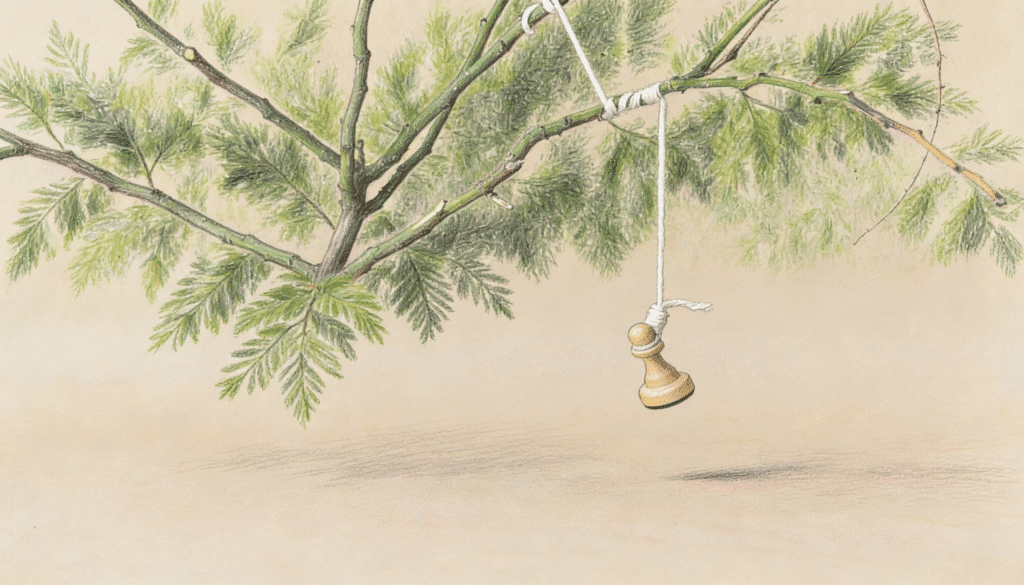
Hanging pieces sit there, undefended, in chess clubs around the world—creating a peculiar moment. A player has left one in the center of the board. Their opponent stares at it, squinting, checking for traps. Minutes tick by. The piece remains vulnerable and obvious. But nobody takes it.
This is the strange power of the hanging piece.
Most chess instruction teaches players to protect everything. Defend your pawns. Guard your pieces. Never leave anything hanging. This advice works fine for beginners who blunder away queens by accident. But somewhere along the path to mastery, a different truth emerges. Sometimes the most defended position is the one that looks weakest.
The Tension Nobody Wants
Chess players hate one thing more than losing material. They hate uncertainty.
A hanging piece creates a question that demands an answer. Should I take it? Is this a trap? What am I missing? The human brain doesn’t handle these questions well under time pressure. Every second spent analyzing the hanging piece is a second not spent finding the best move. Even worse, the opponent starts second guessing their own calculation. They saw the piece was hanging. They checked for tricks. They didn’t find any. But surely nobody just leaves a piece hanging at this level, right?
This psychological warfare has nothing to do with chess theory. It lives entirely in the space between what the position actually contains and what people fear it might contain.
Consider what happens in a typical game. White builds a normal position. Everything is defended. Black mirrors with their own solid setup. Both sides shuffle pieces, looking for an opportunity. Nobody wants to commit. The position stays balanced for thirty moves until someone makes a tiny mistake or the players agree to a draw.
Now imagine White plays differently. On move twelve, White pushes a central pawn forward. The pawn has no support. Black can capture it immediately with no consequences. Except Black doesn’t. Black spends five minutes calculating. Black checks if the pawn is poisoned. Black looks for sacrifices. Black considers whether this is some opening preparation they don’t know. The pawn stays on the board. White uses those five minutes to improve piece placement, castle to safety, and build up on the kingside.
The paradox sharpens. The worse the position looks, the more time opponents spend trying to understand why anyone would play it.
When Ugliness Becomes Beauty
There’s a specific type of position where hanging pieces work their magic best. The center needs to be open. The game needs to be complex. Both sides need to have active possibilities. In technical terms, the position needs to have what chess players call “trumps” for both sides.
Drop a hanging piece in a simple, quiet position and it’s just a blunder. Drop the same piece in a sharp tactical battle where both kings face danger, and it becomes a weapon.
The key insight is this: complicated positions already strain human calculation. Add an obvious tactical blow that seems too good to be true, and the opponent’s brain overloads. They know they should take the free piece. They also know that in sharp positions, free pieces are rarely free. This conflict between greed and caution freezes decision making.
Smart players exploit this freeze. While the opponent burns time trying to figure out whether the center is truly hanging or merely looks that way, the player who left it hanging continues developing threats. The threats might not even be real yet. They just need to look real enough to keep the opponent worried about something other than grabbing material.
Time becomes the real currency. In a forty move game with ninety minutes on the clock, spending fifteen minutes deciding whether to take a pawn means having less time for the actual critical moments later. Meanwhile, the player who left the piece hanging moves quickly because they already know their plan.
The Framework of Chaos
Building a position with hanging pieces requires setup. The chaos doesn’t arrive by accident.
First comes piece activity. Every piece needs to aim at something important. Maybe the bishop eyes the enemy king. Perhaps the rook sits on an open file toward the opponent’s queen. The knight might be one hop away from a fork. Nothing needs to work immediately. Everything just needs to threaten to work.
Second comes king safety imbalance. If both kings are perfectly safe, taking free material becomes easy. But if the opponent’s king feels slightly exposed while capturing that hanging piece, suddenly the decision gets harder. They have to calculate whether grabbing the piece gives the other player time to launch an attack. Even if the attack doesn’t exist yet, the fear of it changes how opponents think.
Third comes pawn structure tension. Central pawns that could advance or exchange create additional possibilities to track. Each pawn break represents another variation to calculate. Pile enough variations together and even strong players struggle to see everything clearly.
The hanging piece sits in the middle of this complex web. It’s not bait in the traditional sense. Traditional bait trades something small to win something bigger. The hanging center piece might not lead anywhere concrete. It just occupies mental bandwidth while the real plan develops elsewhere.
Reading the Opponent
This approach fails against certain player types. Some opponents don’t care about tricks. They calculate concrete variations, see the piece is actually hanging, take it, and consolidate. These players have either exceptional calculation ability or exceptional courage. Either way, they’re dangerous.
The hanging center strategy works best against cautious opponents. These players double check everything. They trust their intuition that says “this looks wrong” even when calculation says “this is fine.” They’ve been burned before by grabbing material too quickly. That history makes them hesitant.
There’s a middle category too. Opponents who are strong enough to smell something fishy but not quite strong enough to prove nothing is wrong. These players suffer most from hanging pieces. They spend enormous energy trying to disprove what their intuition tells them. When they finally convince themselves to grab the material, they’re already behind on time and confidence.
Understanding which type of opponent sits across the board shapes whether this strategy makes sense. Against a computer, hanging pieces are just blunders. Computers don’t feel psychological pressure. Against a human who has shown cautiousness in previous games, hanging pieces become a legitimate weapon.
The Practical Benefits Nobody Discusses
Beyond the psychological warfare, hanging pieces offer concrete practical advantages that don’t show up in chess books.
Clock management shifts in fascinating ways. The player hanging material moves faster because they know the position. They understand which pieces are actually hanging versus which pieces just look vulnerable. This confidence translates to time savings. The opponent moves slower because they need to verify what they’re seeing. That time differential compounds over multiple moves.
The evaluation also gets murky. After someone takes the hanging piece, is the position better for the player who sacrificed or the player who grabbed? Often neither player knows for certain. This ambiguity favors the player who created it. The opponent got dragged into it reluctantly.
Preparation plays a role too. A player can practice positions with hanging centers against computers at home. They learn which types of hanging pieces actually work and which fall apart under proper defense. This homework creates an information asymmetry. The opponent sees the hanging piece for the first time during the game. They have no database of reference positions to guide their decision.
Even the post game analysis shifts. After the game ends, people check with computers. Maybe the hanging piece was truly bad. Maybe it was actually fine. Either way, the game already finished. The psychological damage already happened. The opponent already spent their time and energy calculating. Whether the calculation was necessary becomes a moot point.
The Line Between Brave and Stupid
There’s an old chess saying worth remembering here. The difference between a brilliant sacrifice and a terrible blunder is whether it works.
Hanging pieces walk this line constantly. Leave a piece hanging and win? Brilliant psychological warfare. Leave a piece hanging and lose? Careless oversight. The line between genius and mistake exists only in the result, not the process.
This reality creates problems for players trying to improve. How much should someone practice positions with hanging material? Too much and they develop bad habits. Too little and they miss a powerful practical tool. Chess culture doesn’t help much either. Traditional coaching emphasizes solid play, prophylaxis, and defending everything. Intentionally hanging pieces sounds reckless.
But reckless and aggressive aren’t the same thing. Reckless means taking unnecessary risks without reward. Aggressive means pushing for advantages even at some cost. Hanging the center to create practical problems fits the aggressive category when done thoughtfully.
The key word is thoughtfully. Hanging a piece requires understanding what the opponent must calculate to take it. If that calculation is simple and clearly winning, the hanging piece is just a mistake. If that calculation is complex and unclear even after substantial thought, the hanging piece becomes strategic.
Strong players develop intuition for this distinction. They feel when a position has enough complications to support hanging material. Weaker players struggle because they either hang pieces in simple positions or defend too much in complex ones.
Building the Skill Without Losing Everything
Learning to aggro opponents with hanging pieces takes practice. The practice looks different from normal chess training.
Start by playing positions with hanging material against a computer. Set up middlegame positions where a central piece hangs obviously. Play both sides. This builds understanding of which hanging pieces are truly dangerous to take and which are legitimately free.
Next, analyze master games where strong players left material hanging temporarily. These games exist, though databases don’t tag them specifically. Look for positions where grandmasters allowed pieces to hang for one or two moves before resolving the tension. Study what made those moments work. Usually some tactical detail justified the temporary looseness.
Then practice the emotional side. Play blitz games where pieces hang intentionally. Get comfortable with that uncomfortable feeling of seeing something undefended. Strong chess requires comfort with discomfort. Positions that look scary to both players usually favor the player who tolerates fear better.
Watch for opponent reactions too. Some players take hanging material instantly. Others agonize over the decision. Learning to read body language and time management patterns helps predict who will fall for hanging pieces and who will simply capture.
The skill also requires knowing when to stop. If an opponent keeps taking hanging material and consolidating successfully, hanging more material won’t suddenly work. Adjust the strategy. Maybe this opponent doesn’t feel the psychological pressure. Maybe they calculate too well. Either way, doubling down on a failing approach just loses chess games.
The Deeper Game
Chess operates on multiple levels simultaneously. There’s the objective position on the board. There’s the evaluation computers would give. There’s the practical reality of what humans can calculate in limited time. And there’s the psychological battle happening in both players’ minds.
Hanging pieces in the center exploit the gap between these levels. Objectively, the position might be equal or even slightly worse. Practically, the hanging piece creates time pressure and calculation errors. Psychologically, it plants doubt and fear.
This approach isn’t for every player or every position. It requires a specific skill set and a willingness to embrace sharp, unclear positions. Some players prefer the safety of solid structures and defended pieces. That’s a valid choice too. Chess offers many paths to success.
But for players who enjoy psychological warfare and practical chances, hanging the center pieces offers a powerful tool. It transforms chess from a pure calculation battle into something messier and more human. It acknowledges that people make mistakes under pressure and that inducing that pressure is itself a skill.
The next time you see an opponent leave something hanging in the center, pause before grabbing it. Maybe they blundered. Or maybe they’re testing whether you’ll fall into the trap. The aggression of hanging pieces isn’t in the position itself. It’s in the question mark they place over the entire game.
That question mark can be worth more than a pawn.