Table of Contents
Picture a chess tournament on a Saturday morning. Players settle into their chairs, some clutching coffee cups like talismans. The clock starts. White moves a pawn forward. Black responds predictably. Another pawn. Another response. The dance begins as it has begun ten thousand times before.
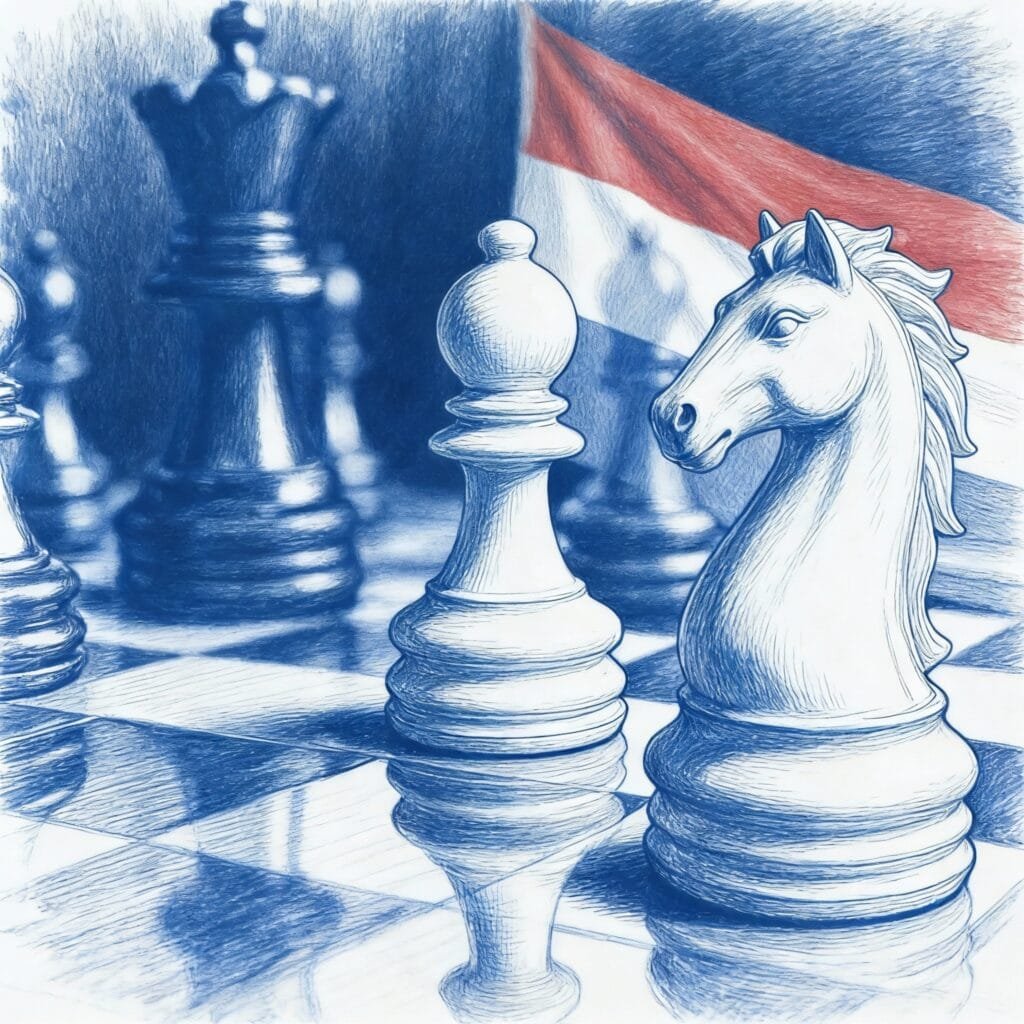
But at the board in the corner, something different happens. White reaches out and moves the knight to an unexpected square. Not the pawn. The knight. Black’s hand, which had been hovering confidently over a piece, freezes. The eyes narrow. The forehead wrinkles. What is this?
This is the Van Geet opening. And the game has already been won in a small but significant way.
The Tyranny of the Expected
Chess players are creatures of habit and preparation. They spend hours memorizing opening sequences, studying master games, drilling theoretical positions until they can play them in their sleep. This preparation forms a kind of mental armor. When the expected moves appear on the board, this armor protects them. They know where they are. They know what comes next.
The Van Geet strips this armor away on move one.
The opening violates an unspoken rule of chess culture. Nearly every beginner learns to start with central pawns. The textbooks say so. The masters demonstrate it. The computer engines prefer it. Moving a knight to the side of the board before touching any pawns feels wrong somehow, like wearing shoes on the wrong feet. It functions, but it makes people uncomfortable.
That discomfort is not a bug. It’s the entire point.
When facing an unusual opening, the opponent must suddenly think for themselves from move one. No memorized lines exist to guide them. No familiar patterns emerge to provide comfort. They must evaluate a position they have likely never seen before, and they must do it while their mental clock is ticking.
This creates what psychologists call cognitive load. The brain must work harder to process unfamiliar information. Meanwhile, the player of the Van Geet sits comfortably, having prepared for exactly this position. One player is navigating known territory. The other is lost in the woods.
The Weight of Judgment
Something deeper happens beyond the practical advantage. When White plays the Van Geet, they make a statement. They announce that they will not play the game according to standard scripts. They accept being judged as unconventional, perhaps even reckless.
This judgment has real weight. Chess culture values correctness and optimality. The Van Geet is neither, at least not by traditional measures. Strong players who use it know they will be dismissed by some opponents, patronized by others. They make peace with this.
But here is where the psychology gets interesting. An opponent who dismisses the opening as inferior often falls into a trap of their own making. They assume White has made a mistake, that the game is already easier for them. This breeds carelessness. They play quickly, confident in their superiority. They miss subtleties. They overextend.
The Van Geet player has seen this movie before. They know the opponent will underestimate them. They welcome it. Underestimation is a gift in competitive situations. It causes people to relax when they should remain vigilant.
Consider the martial artist who adopts an awkward stance. Opponents think this makes them vulnerable. But the awkward stance may hide unexpected angles of attack. The apparent weakness becomes a trap. So it is with the Van Geet.
Breaking the Script
Every chess opening exists within a kind of script, a shared understanding of how the first moves should proceed. These scripts provide efficiency. They let players reach complex middlegame positions without burning time and energy on routine decisions.
Scripts also create blindness. Players become so accustomed to following them that they stop questioning whether the script serves their interests in this particular game against this particular opponent.
The Van Geet burns the script. It forces both players to engage with the actual position on the board rather than with abstract theory. Some might argue this favors neither player, that both must navigate unfamiliar territory. But this misses a crucial asymmetry.
The Van Geet player chose this position deliberately. They wanted to leave the realm of memorization and enter the realm of pure chess understanding. Their opponent had no such intention. One player is a willing participant in the chaos. The other has been dragged into it.
This distinction matters enormously. People handle stress better when they choose it rather than when it’s imposed on them. The Van Geet player experiences the unfamiliar position as opportunity. The opponent experiences it as disruption.
The Question of Legitimacy
Strong players might refuse to take the Van Geet seriously. The computer evaluations are unimpressed. The opening grants no advantage. Objectively, it may even give Black a small edge if both players navigate perfectly.
But chess is not played between computers. It’s played between humans, complete with emotions, biases, and psychological vulnerabilities.
The dismissal of psychological openings reveals an interesting blind spot in chess culture. The community values objective truth, which means the best move according to perfect play. This makes sense at the highest levels of grandmaster competition where both players approach perfection.
For everyone else, this focus on objective truth misses the human element. The best move in a practical game is not always the objectively strongest move. Sometimes the best move is the one that makes your opponent uncomfortable. The one that takes them out of their preparation. The one that forces them to rely on their own abilities rather than borrowed knowledge.
The Van Geet specializes in exactly this kind of practical chess. It asks a simple question: would you rather face an opponent who has memorized twenty moves of theory, or would you rather face that same opponent when they must think for themselves?
The Confidence Paradox
Playing an objectively inferior opening requires a particular kind of confidence. The Van Geet player must believe they can outplay their opponent in the resulting positions despite starting from a theoretically worse spot. This creates an interesting paradox.
On one hand, choosing an inferior opening suggests doubt in one’s ability to compete in mainstream theory. On the other hand, believing you can overcome an objective disadvantage suggests tremendous confidence in your practical playing strength.
Opponents pick up on this contradiction. They sense both the weakness of the opening and the confidence of the player. This creates confusion. How should they respond to someone who plays a bad opening confidently? Mock them? Fear them? The ambiguity itself becomes a weapon.
Confidence in chess functions almost like a physical force. It affects decision making, risk assessment, and tactical sharpness. A confident player sees opportunities that an anxious player misses. They calculate more accurately because they believe their calculations will be accurate.
The Van Geet player builds confidence through unconventionality. While their opponent second guesses themselves in an unfamiliar position, White navigates waters they have chosen. While Black wonders if they are missing some tactical trick or positional trap, White simply plays chess.
The Art of Misdirection
Magicians understand that the secret to illusion lies not in clever tricks but in directing attention. When the audience watches the right hand, the left hand performs the actual magic. The Van Geet works on similar principles.
By playing an unusual first move, White directs Black’s attention to the opening itself rather than to the broader strategic landscape. Black’s brain allocates resources to figuring out what’s wrong with the position, why White chose this move, whether there’s a trap lurking.
Meanwhile, the position continues to evolve. Pieces develop. Pawns advance. The real game unfolds while Black remains mentally stuck on that first surprising move. They are still trying to solve the puzzle of why anyone would start the game this way when they should be addressing immediate strategic concerns.
This misdirection has cumulative effects. Each move that Black spends wondering about White’s intentions is a move they are not spending on their own plans. Each calculation they make trying to punish the opening is a calculation they are not making about improving their position.
Eventually, Black looks up and realizes the middlegame has arrived. The opening phase, which was supposed to be their opportunity to capitalize on White’s mistake, has passed. The position is complex, balanced, and ready to be decided by whoever plays the better chess from this point forward.
The Liberation of Low Expectations
Traditional openings carry baggage. Play the Spanish Game and you inherit centuries of theory, expectations, and critical positions you are supposed to know. Make a mistake in a well known line and you feel foolish. You should have studied harder. You should have remembered.
The Van Geet liberates players from this burden. Nobody expects you to play it perfectly because nobody agrees on what perfect play even looks like in these positions. You are free to experiment, to take risks, to try creative ideas without the weight of established wisdom crushing your inventiveness.
This freedom has practical value. Chess thrives on creativity, yet creativity struggles under the weight of too much knowledge. When players know too much theory, they become conservative. They stick to approved plans. They avoid original ideas because they assume those ideas have already been considered and rejected by stronger players.
The Van Geet says there are no stronger players here. There are no approved plans. You are free to think for yourself and trust your own judgment. This mental state, paradoxically, often leads to better chess. Players who trust themselves play more energetically and imaginatively than players who constantly defer to authority.
The Emotional Rollercoaster
Black’s emotional journey when facing the Van Geet follows a predictable pattern. First comes surprise. Then confusion. Often this evolves into contempt as they recognize the opening’s unorthodox nature. They think they have been handed an easy game.
This contempt sets up the next emotional stage: frustration. As the game progresses and the position fails to collapse in Black’s favor, frustration creeps in. The easy win they expected remains elusive. The position is messy and complex. Their opponent seems unconcerned by their supposedly inferior opening choice.
If White manages to generate real threats or win material, contempt transforms into panic. Black realizes they have underestimated their opponent. They begin to second guess themselves. Maybe the opening was not so bad after all. Maybe they are missing something. The emotional spiral accelerates.
White, by contrast, maintains emotional equilibrium. They expected this position. They are comfortable here. They have no emotional investment in proving the opening is objectively good. They simply need to play better chess than their opponent in the resulting position.
This emotional asymmetry compounds over time. One player grows increasingly flustered while the other remains calm. In a game where calculation accuracy and clear thinking determine the outcome, emotional stability provides a massive advantage.
The Reputation Effect
Interestingly, players who consistently use the Van Geet develop a reputation that precedes them. Opponents who have faced them before or who have heard stories about them approach the board with different psychology than opponents encountering the opening fresh.
Some players prepare specifically for the Van Geet if they know they will face it. But this preparation itself becomes a psychological burden. They spend study time on a rare opening rather than on positions they will encounter regularly. They may over prepare, seeing ghosts and tactics that do not exist.
Others approach known Van Geet players with resignation. They accept that the game will be weird and uncomfortable. This resignation can become a self fulfilling prophecy. Players who enter the game expecting difficulty often find it, even in objectively favorable positions.
The reputation effect works both ways. Van Geet specialists must deliver. If they consistently lose despite their psychological gamesmanship, the opening loses its mystique. Opponents begin to relax against it, recognizing it as a false threat. The psychological advantage evaporates.
This creates a feedback loop. Strong players who use the Van Geet must genuinely be strong at chess, not just strong at surprise tactics. Their objective skill level validates their unconventional opening choice. Weak players who adopt the opening hoping for cheap tricks discover that tricks only work when backed by genuine ability.
Every player who moves that knight to its unusual square on move one sends a small message. They announce their willingness to think for themselves, to trust their own judgment over borrowed wisdom, to compete on psychological as well as technical grounds.
That first move is awkward, yes. Objectively inferior, probably. But it changes the game in ways that numbers cannot capture. It shifts the psychological balance before a single pawn has crossed the center line.
And sometimes, that shift makes all the difference.

