Table of Contents
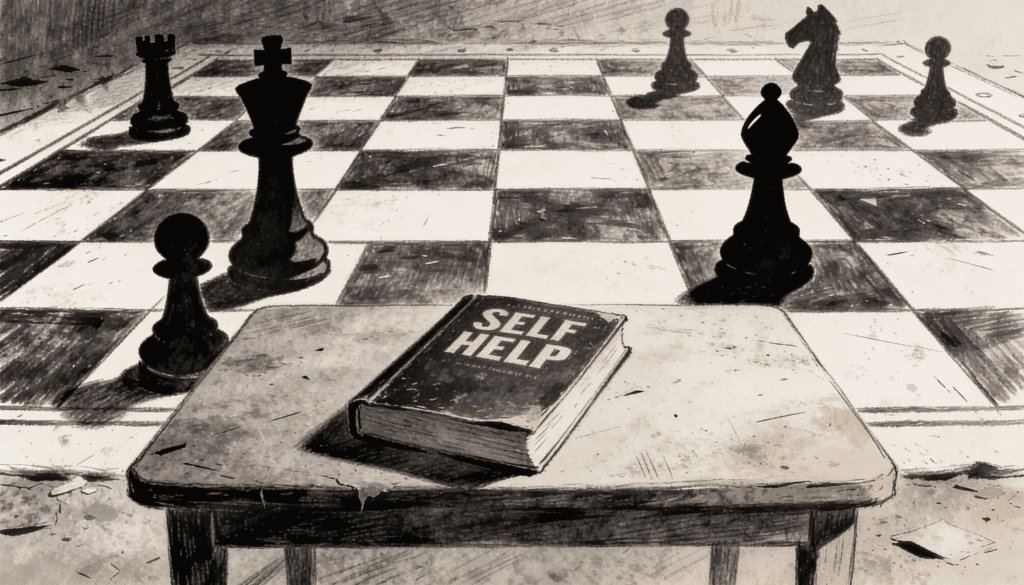
The bookshelf looks impressive. Atomic Habits sits next to The 7 Habits of Highly Effective People. The Power of Now shares space with Think and Grow Rich. Each spine promises transformation. Each cover whispers that the secret to success lies within its pages.
But here’s the uncomfortable truth that nobody mentions at book club meetings: most self-help books deliver the same recycled wisdom wearing different jackets. Set goals. Wake up early. Visualize success. Think positive thoughts. The advice isn’t wrong, exactly. It’s just maddeningly abstract. Reading about discipline doesn’t build discipline any more than reading about pushups builds muscle.
Meanwhile, there’s a chess opening that might teach more about real life strategy than an entire library of productivity guides. It’s called the Sicilian Defense, and it starts with a deceptively simple idea: when your opponent pushes forward, you don’t mirror them. You strike from the side.
The Problem With Feeling Productive
Self-help books create a particular type of trap. They feel like work. Highlighting passages feels productive. Taking notes feels purposeful. Nodding along to familiar wisdom feels like growth. But this is the sensation of learning without the struggle of learning. It’s mental junk food dressed up as nutrition.
The average self-help book reader finishes a book, feels motivated for approximately three days, then returns to their default settings. The issue isn’t lack of intelligence or willpower. The issue is that abstract principles don’t change behavior. Reading that you should “be more assertive” doesn’t teach you how to be more assertive. It just makes you feel bad about not being assertive while you read it.
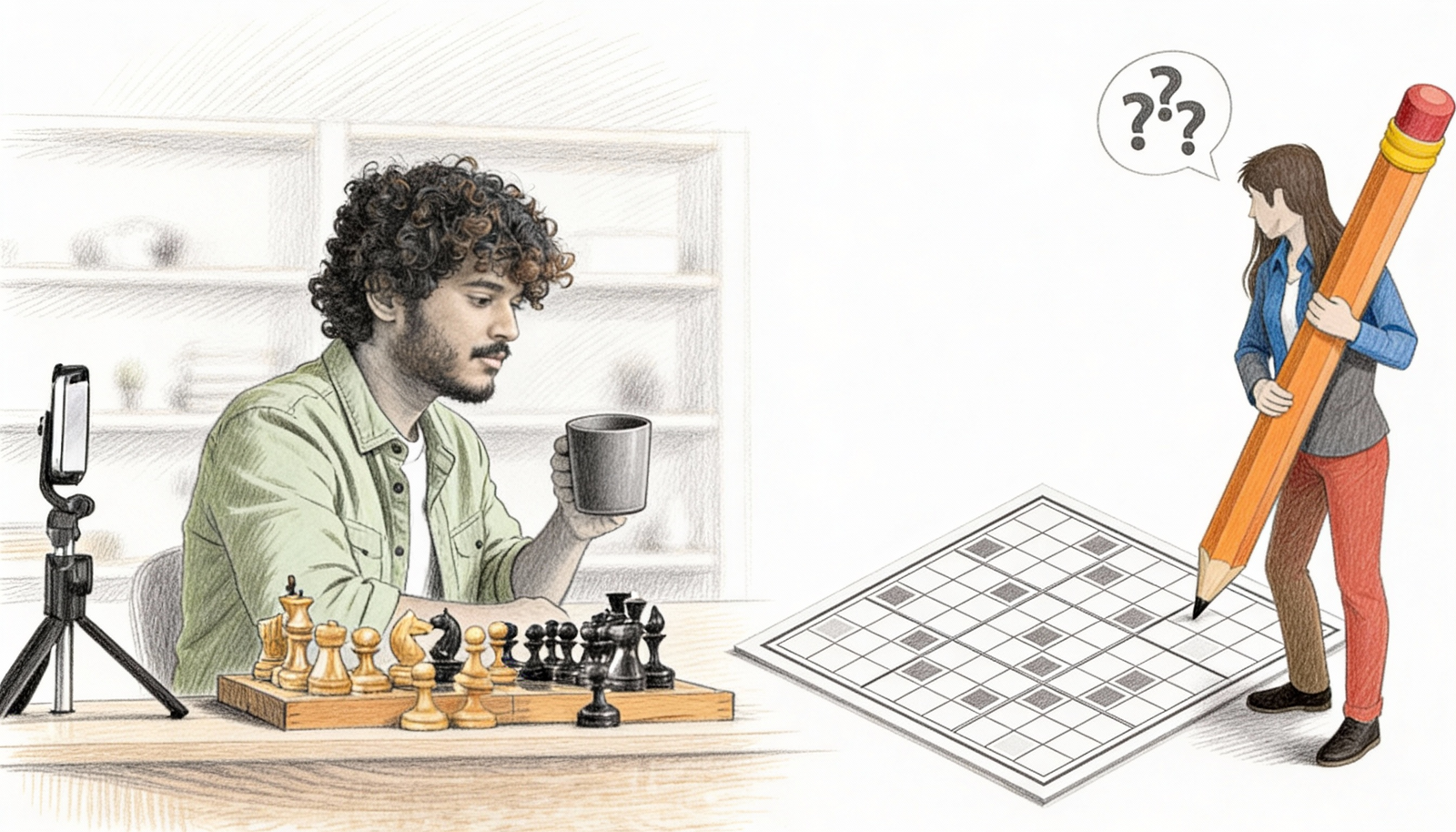
Chess doesn’t play this game. Chess is brutally specific. Either you control the center of the board or you don’t. Either you developed your pieces properly or you didn’t. Either you saw the tactic or you missed it. There’s no room for the kind of comfortable vagueness that lets you feel good without changing anything.
What Makes The Sicilian Different
When White opens with their central pawn to e4, the most passive response is to copy them. Push your own central pawn forward. Accept symmetry. Accept that the player moving first has a slight advantage and try to equalize slowly, carefully, safely.
The Sicilian says no to all of that.
Instead of accepting the terms offered, Black immediately creates an imbalance. The position becomes asymmetrical. What follows won’t be a calm, equal trade. It will be a fight. White has more space in the center. Black has counterplay on the side. Both players have winning chances. Both players have ways to lose.
This is where the opening parts ways with most self-help philosophy. Self-help books love balance. They want you to find equilibrium, to be centered, to maintain work-life harmony. The Sicilian operates on different principles. It teaches that sometimes the path to winning requires accepting temporary discomfort and imbalance. It teaches that fighting for what you want means giving up the illusion of safety.
The Three Frameworks That Matter
Study the Sicilian deeply enough and three major frameworks emerge. These aren’t neat acronyms or seven-step programs. They’re strategic realities that apply whether you’re looking at a chessboard or a career.
The Framework of Initiative
Initiative in chess means making threats that force responses. When you have initiative, your opponent reacts to you rather than pursuing their own plans. The Sicilian is designed to seize initiative even from the disadvantage of moving second. Black creates immediate tension. Black demands that White respond to threats rather than simply executing their ideal setup.
Translate this away from the board. Most self-help advice tells you to respond better to what life throws at you. Build resilience. Develop grit. Learn to handle adversity. All fine advice, except it positions you as permanently reactive. The Sicilian mindset asks different questions. How do you create situations where others must respond to your moves? How do you turn defense into counterattack?
The person who waits for their boss to notice their good work is playing symmetrical chess. The person who proposes a specific project that solves a visible problem has seized initiative. One hopes for balance. The other creates imbalance that forces a response.
The Framework of Tension
Most self-help wisdom aims to reduce tension. Meditate. Find calm. Reduce stress. These things have value, obviously. But the Sicilian exists because of a different insight: controlled tension is a tool.
When the Sicilian player develops their pieces, they do so toward the tension points. They don’t hide in the corner seeking peace. They aim their forces at the areas where the game will be decided. This requires constant attention. This requires comfort with discomfort.
There’s a parallel here to the difference between avoiding difficult conversations and learning to navigate them. Between avoiding challenging projects and developing the capacity to handle complexity. Self-help books often promise that the right mindset will make hard things feel easy. The Sicilian suggests something else: that growth comes from expanding your capacity to handle tension, not from eliminating it.
The Framework of Sacrifice
Every strong Sicilian player knows that material advantage doesn’t always translate to winning advantage. Sometimes you give up a pawn to open lines for your pieces. Sometimes you sacrifice safety for activity. The calculation isn’t simple. But the principle stands: the person who only protects what they have will eventually lose to the person who invests in better positioning.
Career advisors love to talk about work-life balance. The Sicilian player thinks in terms of work-life dynamics. There are seasons for building, where current comfort gets sacrificed for future strength. There are moments to consolidate, where you protect what you’ve gained. Timing matters more than following a static rule about balance.
Why Chess Study Works Differently
Here’s what happens when someone commits to genuinely studying the Sicilian Defense. Not just memorizing moves, but understanding the ideas behind them. Not just following recipes, but grasping the strategic themes.
First, you fail. You try the opening and get crushed because you don’t understand the subtleties yet. You miss the right moment to strike back. You get your king caught in the center. You realize that ambitious play without knowledge is just recklessness.
This is where chess parts ways with self-help books most dramatically. Chess punishes you immediately and specifically for understanding things incorrectly. There’s no way to fool yourself. You either saw the pattern or you didn’t. You either understood the idea or you didn’t. The board doesn’t care about your intentions or your positive attitude.
So you study deeper. You look at master games. You see how strong players handle the same positions. You notice patterns you missed before. You see that what looked like random moves actually fit into a larger plan. You try again. You still lose, but you understand why. You adjust.
This cycle, repeated hundreds of times, builds something that reading inspirational quotes never does. It builds pattern recognition. It builds the ability to evaluate complex positions. It builds genuine confidence based on genuine competence.
The Uncomfortable Part
Studying chess seriously reveals an uncomfortable truth about improvement. It’s not primarily about motivation or mindset. It’s about accumulated specific knowledge tested against reality.
The Sicilian player improves by studying thousands of positions until the right moves become instinctive. By understanding typical pawn structures until they can navigate them in their sleep. By absorbing strategic principles until they can apply them under time pressure.
This is the opposite of what sells books. There’s no shortcut. There’s no secret trick. There’s no mindset shift that replaces the need for focused study and practice. The path from beginner to expert in any real skill follows the same pattern: study, practice, fail, learn, repeat.
Self-help books sell well because they promise that personal transformation can be simple. That the right perspective or morning routine will unlock everything. Chess tells a different story. The story says that meaningful capability in any domain requires sustained attention to specific skills. That abstract principles matter less than concrete knowledge. That you can’t think your way to competence; you have to build it.
What The Sicilian Teaches About Decision Making
Watch someone who truly understands the Sicilian evaluate a position. They don’t just see pieces and squares. They see relationships between elements. They understand which pieces work well together and which don’t. They recognize when a position is ripe for tactics and when it requires patient maneuvering.
This kind of sophisticated evaluation emerges only after studying hundreds of examples. After seeing which aggressive moves worked and which ones backfired. After experiencing the consequences of various choices dozens of times.
Compare this to typical self-help advice about decision making. Make lists of pros and cons. Trust your gut. Sleep on it. These aren’t useless suggestions. But they’re vague scaffolding without specific knowledge to build on.
The Sicilian player learns that good decisions in complex situations come from pattern recognition built through experience. You can’t think your way through every decision from first principles when under time pressure. You need internalized frameworks. You need to have studied enough examples that the right path becomes clear more quickly.
The Social Element
Chess, despite its reputation, isn’t a solitary pursuit. Serious chess players study games together. They debate positions. They share insights. They learn from each other’s mistakes.
The Sicilian in particular has a rich culture around it. Players share favorite variations. They discuss new ideas. They argue about which approach works best in which situations. This collaborative learning accelerates improvement in ways that solo study can’t match.
Self-help books, ironically, isolate people. Everyone reads alone. Everyone tries to implement advice alone. Everyone struggles with the gap between principle and practice alone. There’s no community of people working through the same specific challenges and sharing concrete solutions.
The chess community understands something important: improvement in complex domains requires both individual effort and collective knowledge. You study alone to understand deeply. You engage with others to expand your perspective. Both matter.
The Long Game
The most successful Sicilian players think in long time horizons. They accept that full mastery takes years. They understand that plateaus are normal. They know that improvement isn’t linear.
This patience comes from the nature of the study itself. Chess improvement is measurable. Your rating goes up or it doesn’t. You solve puzzles or you don’t. This objective feedback teaches realistic expectations about the pace of growth.
Self-help books, by contrast, often promise rapid transformation. Thirty days to a new you. Twenty-one days to form a habit. Quick wins and immediate results. This might make for good marketing, but it sets people up for disappointment. Real skill development takes longer than a month. Real behavior change takes longer than three weeks. The gap between promise and reality creates a cycle of motivation and discouragement.
Studying the Sicilian teaches a different relationship with time. It teaches that today’s work might not show results for months. That consistency matters more than intensity. That the compound effect of small improvements adds up to substantial change, but only over meaningful timeframes.
The Alternative Path
None of this means self-help books have zero value. Some contain useful ideas. Some organize thinking in helpful ways. But they work best as supplements to specific skill building, not as replacements for it.
Want to become more strategic? Study strategy in a concrete domain like chess. Want to improve decision making under pressure? Put yourself in situations that actually create pressure, then study your choices. Want to build discipline? Pick a skill that requires daily practice and track your progress objectively.
The Sicilian Defense serves here as a specific example of a larger principle. Real improvement comes from engaging with real complexity in a measurable domain. It comes from feedback loops that can’t be fooled. It comes from accumulating specific knowledge through practice.
The Invitation
The next time the impulse arises to buy another book promising personal transformation, consider a different experiment. Take that same time and energy and invest it in studying the Sicilian Defense. Not just reading about it, but actually studying it. Playing it. Failing with it. Learning from losses. Gradually building understanding.
Six months of genuine chess study will teach more about strategic thinking, pattern recognition, decision making under pressure, handling setbacks, and long-term improvement than six months of reading motivational literature.
The beauty of this approach is its honesty. Chess won’t promise that studying it will transform your life. It won’t claim to hold secret wisdom. It will simply present positions and ask: what’s the best move? Can you find it? Can you explain why? Can you learn from your mistakes?
That kind of concrete challenge builds concrete capability. And concrete capability, accumulated over time, actually changes what you can do in the world. Which is, perhaps, what all those self-help books were promising all along.
The board is set. Your opponent has played their first move. The choice between passive acceptance and ambitious counterplay awaits. The Sicilian Defense isn’t just a chess opening. It’s a framework for approaching challenges with eyes open, understanding that growth comes through engagement with difficulty, not through reading about engagement with difficulty.
Time to stop highlighting passages and start making moves that matter.